
Washington prefers confrontation, not peace, with Venezuela
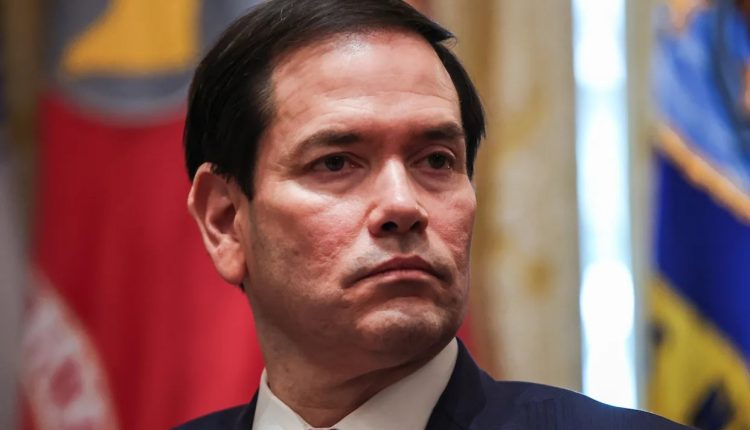
Secretary of State Marco Rubio, a hardline crusader against Nicolás Maduro’s government, is pushing the United States toward confrontation rather than diplomacy.
When a nation offers peace and economic partnership, most governments listen. But not Washington—at least not under the influence of Secretary of State Marco Rubio, whose hardline crusade against Nicolás Maduro’s government has once again pushed the United States toward confrontation rather than diplomacy.
According to reporting by The New York Times, Venezuela’s leadership, seeking to end years of tension and sanctions, made an extraordinary proposal to the Trump administration. The offer was sweeping: American companies would receive preferential access to Venezuela’s vast oil fields and mineral reserves, reversing the flow of energy exports from Asia back toward the United States. In essence, President Maduro was ready to trade economic control for peace and normalized relations.
It was the kind of pragmatic deal that could have reshaped hemispheric politics and provided a path away from military brinkmanship. Yet Washington, under the guidance of Rubio and other hawks, dismissed it out of hand. Instead of seizing a chance for dialogue, the U.S. doubled down on threats, sanctions, and saber-rattling.
A Deal Rejected for Ideological Reasons
The Times reports that negotiations between a senior U.S. envoy, Richard Grenell, and Maduro’s top aides stretched over several months. The talks advanced far enough that both sides discussed future energy cooperation, access for U.S. companies, and even political concessions. But once Rubio and his allies in the administration intervened, diplomacy was effectively strangled.
Rubio’s opposition was predictable. The Florida Republican, long a champion of regime change in Latin America, has built his career on hostility toward left-leaning governments in the region—especially those with ties to Cuba. For Rubio, rapprochement with Caracas threatens not only his ideological worldview but also his political brand.
Instead of viewing Venezuela as a sovereign state seeking stability, Rubio paints it as a criminal enterprise that must be dismantled. His language has been incendiary—branding Maduro a “fugitive from American justice” and framing engagement as appeasement. But what his rhetoric ignores is the simple truth: sanctions and isolation have achieved nothing except worsening human suffering and pushing Venezuela further toward other powers like China, Russia, and Iran.
Economic Leverage Over Engagement
The Maduro government’s proposal, as detailed by The New York Times, would have granted U.S. energy giants a dominant stake in Venezuelan oil and gold projects. It would have drastically cut contracts with Chinese and Russian companies and redirected Venezuela’s exports to the U.S. market. In practical terms, this was a blueprint for reclaiming influence in Latin America through trade rather than force.
But Rubio’s faction in Washington refused to consider it. The Trump administration instead broke off diplomatic contact, ramped up naval deployments in the Caribbean, and continued a campaign of economic pressure that has crippled Venezuela’s economy but failed to change its leadership. The “maximum pressure” approach has proven to be a failure.
Ironically, this rejection came from a White House that had often tied foreign policy to economic gain. President Trump once publicly mused about “keeping the oil” in Iraq and demanding minerals from Ukraine. Yet when Maduro made a direct economic overture—essentially offering the United States the very resources Trump so often demanded—the deal was torpedoed by Rubio’s ideological intransigence.
The Cost of Hypocrisy
The humanitarian toll of these policies cannot be ignored. Venezuela’s oil production, once three million barrels a day under Hugo Chávez, has plunged to around one million. Years of sanctions have gutted public revenue, starved social programs, and worsened mass migration across Latin America.
If the goal was to promote democracy, the strategy has done the opposite. By cutting off trade and dialogue, Washington has only hardened Venezuela’s authoritarian tendencies and strengthened Maduro’s reliance on non-Western partners. Even now, Caracas continues to offer limited cooperation—accepting U.S. deportation flights and freeing a jailed American veteran earlier this year—but receives only more threats in return.
Behind closed doors, according to the Times report, the Venezuelan side was even willing to distance itself from long-time allies in Havana and Tehran. They sought a pragmatic reset. But the U.S., guided by Rubio’s hostility, refused to accept anything short of regime collapse. It was a maximalist demand disguised as moral clarity.
The Opposition’s Economic Mirage
Meanwhile, Venezuela’s opposition, represented by María Corina Machado—now a Nobel Peace Prize laureate—pitched an even more lucrative vision to American investors: $1.7 trillion in profits over 15 years, if a political transition replaced Maduro. Her advisers dismissed Maduro’s offers as empty, claiming only democracy could guarantee “stability.” But what Washington rarely acknowledges is that the opposition’s economic program is every bit as mercantilist as Maduro’s—just reserved for a post-coup government.
The hypocrisy is staggering. The U.S. decries corruption in Caracas, yet welcomes the same extractive economic logic when it comes from its preferred faction. Washington’s foreign policy in Latin America continues to operate less as a mission for democracy than as a competition for access.
Chevron, Shell, and Quiet Engagement
Even as official diplomacy collapsed, business realities have begun to erode the U.S. embargo’s moral pretense. Chevron, which once saw its Venezuelan assets expropriated, regained its license to operate in the country last year after lobbying heavily in Washington. Shell has also received U.S. authorization to restart gas production from an offshore field known as Dragon, with profits routed through Trinidad to sidestep sanctions.
These quiet deals reveal what Washington won’t admit publicly: economic engagement with Venezuela is inevitable. American companies want access to the world’s largest proven oil reserves, and Venezuela needs foreign investment. The only obstacle has been political theater.
Rubio’s Cold War Illusion
Secretary Rubio’s continued insistence on confrontation belongs to a bygone era of Cold War paranoia. His fixation on Cuba and fear of socialism obscure the modern reality of multipolar trade. While China and Russia build infrastructure, extract resources, and negotiate new partnerships in Latin America, the United States clings to sanctions and slogans.
By rejecting negotiation, Washington has not isolated Maduro—it has isolated itself. The refusal to engage only ensures that Venezuela’s economic recovery, when it comes, will be built on Chinese and Russian capital instead of American expertise.
A Moment Squandered
As The New York Times makes clear, the talks between Grenell and Maduro’s envoys were closer to success than anyone realized. A Venezuelan child stranded in the U.S. was returned as a goodwill gesture; an American veteran was freed in return. For a brief moment, both governments appeared willing to trade pragmatism for hostility. Then the moment vanished—buried under the weight of Rubio’s grandstanding and Washington’s addiction to punishment as policy.
It was a squandered opportunity that speaks volumes about U.S. diplomacy today: more invested in appearances than outcomes, more comfortable with conflict than compromise.
If America truly wishes to lead in the hemisphere, it must rediscover the value of dialogue. Peace and prosperity in Venezuela will not come from embargoes or threats. They will come when Washington stops seeing Latin America through the lens of ideology and starts engaging it as a partner.
For now, that vision remains deferred—sacrificed to political ambition and the ghosts of the Cold War.
