
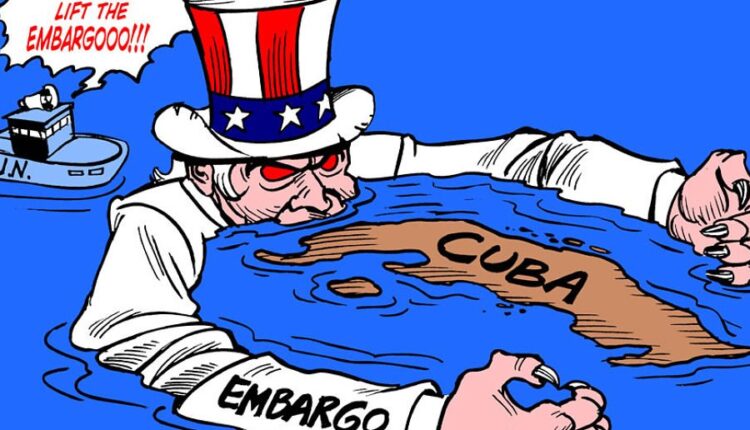
Why Cuba is under siege
A summary based on the magazine, The Week – UK.
In an article that appears in The Week-UK, the staff looks at why Cuba is experiencing one of the most severe crises in its modern history, and concludes that it is driven by a combination of longstanding domestic economic problems and dramatically increased pressure from the United States.
According to the article, daily life has deteriorated significantly. Frequent nationwide blackouts have left many Cubans with only limited access to electricity. Water service is unreliable, food shortages are widespread, fuel is scarce and expensive, and wages have lost much of their purchasing power. The healthcare and education systems, once viewed as major achievements of the Cuban Revolution, are described as suffering from years of decline.
The article also points to the collapse of tourism—one of Cuba’s principal sources of foreign currency—as a major contributor to the country’s economic hardship. It says visitor numbers have fallen sharply, transportation has been disrupted by fuel shortages, mosquito-borne illnesses have become more common, and a growing number of Cubans have emigrated in recent years.
The article attributes the crisis to several overlapping factors. It argues that decades of inefficient economic management by the Cuban government weakened the country’s economy long before recent events. It also contends that Cuba invested heavily in tourism during the 2010s while underinvesting in other sectors, leaving the country especially vulnerable when the COVID-19 pandemic devastated international travel. The government is also criticized for its handling of the widespread protests that erupted in 2021.
However, the article identifies a U.S. oil blockade imposed in early 2026 as the immediate catalyst for the current emergency. It describes the measure as the most significant American economic pressure campaign against Cuba in decades. At the same time, President Donald Trump is said to have declared Cuba a national security threat and publicly urged Cuban leaders to negotiate before conditions worsened further.
The article says Washington justified its tougher policy by citing Cuba’s close relationships with Russia and China and accusing Havana of contributing to regional instability. It also notes that Cuba has long been a central political issue for many Republicans, particularly Secretary of State Marco Rubio, who has consistently advocated for democratic change on the island.
A major element of the article’s analysis focuses on Venezuela. It explains that Cuba depended heavily on subsidized oil from Venezuela for many years. According to the article, after U.S. actions against Venezuela in early 2026, both Venezuela and Mexico halted oil shipments to Cuba, resulting in severe fuel shortages that disrupted electricity generation and transportation across the island.
The article further argues that the Trump administration hoped to encourage political change in Cuba similar to developments it describes in Venezuela. While the administration had not publicly outlined specific negotiating demands, the article suggests U.S. officials viewed economic pressure as a means of encouraging leadership changes rather than necessarily requiring immediate democratic reforms.
It also discusses Cuba’s response, noting that the government reportedly introduced a large package of market-oriented economic reforms intended to ease tensions and demonstrate a willingness to negotiate.
Despite these developments, the article concludes that major obstacles remain. U.S. law, domestic politics in Florida, and the continuing influence of Raúl Castro are all presented as barriers to a negotiated settlement. From the Cuban perspective, the article argues that surrendering senior leaders would be politically unacceptable, while no obvious alternative leadership has emerged to manage a transition.
Although the article considers a direct U.S. military invasion unlikely, it suggests that continued economic pressure could eventually force political change. At the same time, it warns that any transition could be difficult because Cuba has operated under a one-party system for generations, and relations between Havana and Washington remain deeply adversarial.
Ultimately, the article emphasizes that ordinary Cubans bear the greatest burden of the crisis. Regardless of political disagreements between the two governments, it concludes that the island’s population is enduring extraordinary hardship and that the humanitarian situation continues to worsen.
