
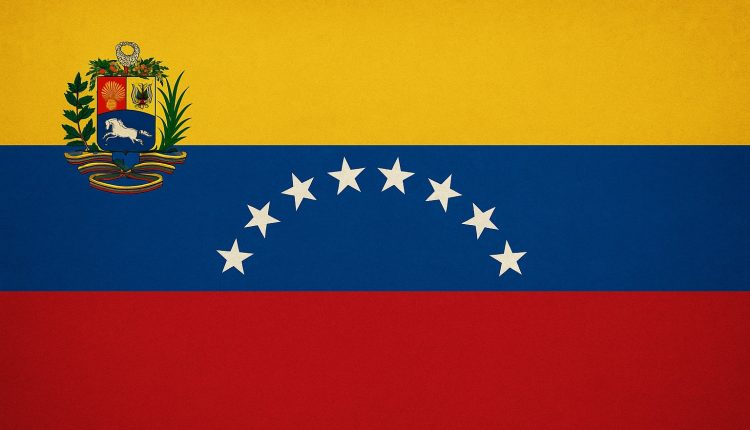
Colombia’s Petro floats Colombia-Venezuela alliance against U.S. attacks
President Donald Trump’s administration has escalated a controversial campaign of strikes on small vessels off the coasts of Venezuela and Colombia, saying the attacks target drug-smuggling operations that pose an “existential” threat to the United States. In the latest incidents, U.S. forces struck two more boats in the eastern Pacific this week, killing six people, and raising the death toll in the months-long series of operations to well over 70.
The strikes, which began in September, have grown from isolated interdiction actions into a sustained military campaign. U.S. officials — including President Trump and Defense Secretary Pete Hegseth — argue the actions are lawful self-defense against transnational criminal organizations trafficking vast quantities of cocaine and other drugs into the U.S. They’ve framed the campaign as part of a “non-international armed conflict” against designated narco-terrorist groups and claim that military firepower is disrupting shipments that would otherwise reach American streets.
But legal experts, human rights organizations, and many foreign governments see the strikes very differently. Independent experts from the United Nations Human Rights Council say the U.S. strikes off Venezuela’s coast in international waters amount to “extrajudicial executions”.
![]() Legal and normative concerns
Legal and normative concerns
 Legal and normative concerns
From an international law perspective, the core issues center on sovereignty, use of force, and the nature of the target. Critics argue that destroying vessels in international waters without clear host-state consent, clear attribution, or publicly disclosed evidence violates the law of the sea and the laws of armed conflict. For instance, the UN experts found that even if the trafficker-link claims were substantiated, the use of lethal force in international waters without a proper legal basis is unlawful.
Domestically in the U.S., questions arise over whether the president has the authority to initiate sustained military operations outside declared war zones without explicit congressional authorization. Some in Congress argue the administration is converting a criminal law-enforcement problem into sustained military operations without legislative oversight.
From a practical standpoint, doubts remain about whether the strikes are reducing narcotics flows. Investigative reports suggest many craft targeted are smaller vessels, not necessarily the deep-hull, high-capacity trafficker boats that form the backbone of trans-Atlantic cocaine flows. Humanitarian advocates warn of civilian casualties, risk of misidentification, and the lack of transparency and accountability around the operations.
Regional blowback and escalating tensions
Regionally, the strikes have triggered strong condemnation. Venezuelan officials denounce the operations as violations of sovereignty and “extrajudicial execution”. Colombian President Gustavo Petro has strongly criticized the U.S. buildup and the strikes, escalating the diplomatic crisis with Washington. Colombia’s foreign ministry has called the U.S. military presence “excessive” and destabilizing.
Petro has gone further: he claimed that one of the most recent vessels struck by the U.S. was in fact Colombian and had Colombian citizens aboard. The U.S. White House labelled the claim “baseless and reprehensible.”
The unexpected pivot: Petro floats union with Venezuela
Amid this rising drama, President Petro has hinted at a more ambitious political project: a greater union or alignment with Venezuela. While not formally declaring a merging of states, Petro has spoken of deeper cooperation across the Colombia-Venezuela border, economic integration, and a shared front against foreign intervention. In previous statements, he has emphasized the need for “dialogue, reconciliation and union” in Venezuela and by extension across the region.
Although Petro has been critical of elements of the Venezuelan regime, he has also rejected the U.S. military approach. He has sought to preserve relations with Venezuela rather than breaking them. The idea of a union with Venezuela is controversial—it alarms many in Bogotá’s traditional diplomatic circles and among Western partners who see Venezuela’s government under Nicolás Maduro as oppressive and implicated in trafficking networks.
Why the shift? Analysts suggest Petro’s gesture is partly a strategic countermove to the U.S. military build-up in the Caribbean and Pacific. By signalling a possible Colombia-Venezuela alignment, Petro is repositioning Bogotá as an independent regional actor and pushing back against perceived U.S. overreach. The move further complicates Washington’s calculus: what had been considered a bilateral Colombia-U.S. counternarcotics partnership is now caught in a triangular dynamic involving Colombia, Venezuela, and the U.S.
U.S. military build-up and its broader implications
The U.S. military presence in the region has grown significantly. Deployments include warships, a nuclear-powered submarine, F-35 stealth fighters, surveillance aircraft, and thousands of troops in the southern Caribbean and Pacific littoral. Venezuela recently detected U.S. combat jets near its coast and described them as “a threat to national security”.
The Trump administration maintains the buildup is necessary to interdict narcotics, but many regional governments interpret it as pressure on Venezuela — or even a pilot for regime-change operations. Because the strikes are so lightly documented, the suspicions of ulterior motives persist. Colombia, through Petro’s government, has formally protested the escalation and military activity near its border region.
How the union talk fits in
Petro’s implication of a Colombia-Venezuela union plays out amid heightened regional tension. The logic appears multi-layered:
- Strategic depth: A closer Colombia-Venezuela cooperation gives Petro leverage against U.S. pressure and positions Colombia not simply as a U.S. partner but as a sovereign actor with multiple alliances.
- Diplomatic message: By founding a potential bloc with Venezuela, Petro sends a message to Washington and other regional actors that Latin America isn’t a U.S. backyard to be bargained over unilaterally.
- Border and economic logic: Colombia and Venezuela share a long border and cross-border communities; Petro has promoted ideas of a “zone binational” economic integration.
- Anti-intervention stance: The looming U.S. military presence prompts Petro to play the regional card of Latin American solidarity against external military operation. A Colombia-Venezuela union would symbolically strengthen that front.
While the talk of full union remains speculative, its presence in Petro’s rhetoric signals a fundamental shift in Bogotá’s posture—and complicates U.S. strategic planning in the hemisphere.
The broader takeaway
This is not simply a story of drug interdiction gone awry. It reflects shifting geopolitical alignments, contested doctrines of self-defence and use of force, and a growing pushback in Latin America’s “backyard” against what many see as U.S. military overreach.
From the U.S. vantage point, the strikes represent a bold attempt to redefine counternarcotics by framing drug trafficking as “narcoterrorism” and authorising military action rather than solely law enforcement. But the absence of transparency and legal clarity risks eroding legitimacy and inviting regional backlash.
From the Colombian and broader Latin American view, the strikes and buildup raise fears of intervention, violation of sovereignty, and the instrumentalisation of drug policy for geopolitical ends. Petro’s flirtation with a union with Venezuela reflects a desire to reclaim agency—though it also raises new questions about Colombia’s own foreign policy trajectory and which alliances it will pursue.
If the union concept progresses, it could dramatically reshape alliances in the region. For now, it remains rhetorical—but it underscores how the U.S. military campaign off the coasts of Venezuela and Colombia is morphing into a far broader debate over power, sovereignty and the future of hemispheric security.
