
Make America “Great” again? Whose America, exactly?
Across the United States, efforts to restrict how history is taught — particularly regarding slavery, racism, and systemic inequality — mirror earlier attempts to sanitize the past.
By any honest reading of history, nostalgia has often been the most dangerous political force in the United States. During and after the Civil War, competing visions of the nation battled not only on the battlefield but in memory, myth, and public policy. Today, as the country confronts a renewed wave of historical revisionism under President Donald Trump, echoes of Reconstruction’s collapse and the rise of the Lost Cause ideology are unmistakable — and deeply troubling.
During the Civil War, the Confederacy openly declared its purpose: the preservation of slavery and white supremacy. After defeat, however, former Confederates reframed the war as a noble struggle for “states’ rights” and Southern honor. This narrative — later known as the Lost Cause — deliberately erased slavery as the central issue and recast enslavers as patriots rather than perpetrators of human bondage.
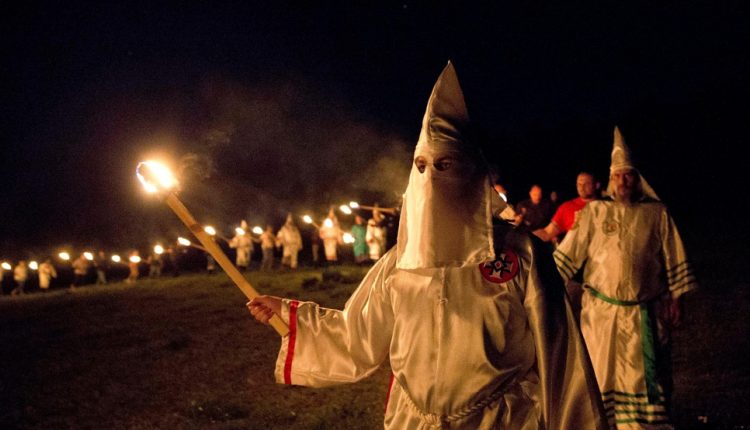
The success of that myth was not accidental. It was enforced through violence, law, and culture. Reconstruction briefly offered a vision of multiracial democracy, with Black Americans voting, holding office, and building institutions. But white supremacist terror organizations like the Ku Klux Klan emerged to destroy that experiment. Lynchings, intimidation, and paramilitary attacks were not fringe phenomena — they were tools of political restoration.
By the late 19th century, Reconstruction had been dismantled, and Jim Crow segregation rose in its place. Textbooks softened the brutality of slavery. Monuments to Confederate leaders filled town squares. The message was clear: the old racial order had been wrong to fall, not wrong to exist.
Today, a disturbingly similar pattern is unfolding.
Across the United States, efforts to restrict how history is taught — particularly regarding slavery, racism, and systemic inequality — mirror earlier attempts to sanitize the past. Politicians and activists warn against “divisive” discussions of race while promoting a romanticized vision of an earlier America, one supposedly characterized by order, prosperity, and greatness. What goes unsaid is that this “greatness” coincided with legalized segregation, voter suppression, and the exclusion of millions from full citizenship.
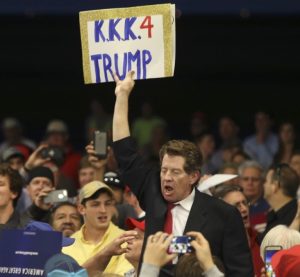 President Trump’s rhetoric has often leaned heavily on this nostalgic framing. His slogan, “Make America Great Again,” invites a question that historians routinely ask: great for whom? For many Americans — particularly Black, Latino, Indigenous, and immigrant communities — earlier eras were marked not by prosperity but by exclusion and violence.
Trump’s own language has reinforced that divide. His description of certain nations as “shithole countries,” many of them predominantly Black, Hispanic, or Middle Eastern, reflects a worldview long embedded in American racial hierarchy: that Western, white-majority societies are inherently superior. Such rhetoric does not emerge in a vacuum; it draws from centuries of colonial thinking and domestic racial ideology.
Nor are the parallels limited to language. Just as Reconstruction faced violent resistance from white supremacist groups, modern extremist organizations have gained visibility and, in some cases, perceived legitimacy. The Proud Boys, a far-right group with a history of street violence and nationalist rhetoric, became a household name in part after Trump told them during a 2020 debate to “stand back and stand by.” Whether intended or not, the remark was widely interpreted as encouragement.
History shows that such signals matter. In the late 19th century, tacit acceptance from political leaders allowed terror groups to operate openly. Violence was framed as defense of tradition, law, and civilization — themes that resonate today in debates over immigration, policing, and voting rights.
Equally striking is the contemporary push to recast the Jim Crow era as misunderstood or even benign. Some commentators emphasize economic growth or social stability while downplaying the reality of disenfranchisement, segregation, and racial terror. This selective memory closely mirrors the Lost Cause narrative, which portrayed the antebellum South as a harmonious society disrupted by outside interference.
But historical evidence tells a different story. Jim Crow was not simply a set of inconvenient laws; it was a comprehensive system designed to enforce racial hierarchy in every sphere of life — education, housing, employment, transportation, and justice. To describe that period as “greater” requires ignoring the lived experience of millions.
Why does this matter now?
Because the battle over history is ultimately a battle over the future. When societies romanticize oppressive pasts, they lower the moral barrier to reviving elements of those systems. Reconstruction failed not only because of violence but because the nation chose reconciliation with former Confederates over justice for formerly enslaved people. The result was nearly a century of legalized discrimination.
The United States now stands at another crossroads. Demographic change, economic anxiety, and political polarization have created fertile ground for narratives that promise restoration rather than progress. Nostalgia becomes a political weapon, transforming complexity into a comforting myth: that America was once pure, orderly, and unified before diversity and dissent supposedly weakened it.
Yet the true arc of American greatness has always been expansion of rights, not contraction — from abolition to civil rights to broader inclusion across race, gender, and identity. The moments we now celebrate as triumphs were fiercely opposed in their own time by those claiming to defend tradition.
History does not repeat mechanically, but it rhymes. The rhetoric of decline, the elevation of a mythic past, the stigmatization of minorities, and the tolerance of extremist movements all appeared before — and the consequences were profound.
If there is a lesson from the Civil War and Reconstruction, it is this: democracy can survive defeat on the battlefield, but it may not survive defeat in memory. When a nation forgets why it fought for freedom in the first place, it risks surrendering those gains without a shot fired.
America does not need to be made “great” by returning to eras defined by exclusion. Its strength has always come from confronting its failures, not erasing them. The choice today is not between pride and shame, but between myth and truth.
And history makes clear which path leads forward — and which leads back.
