
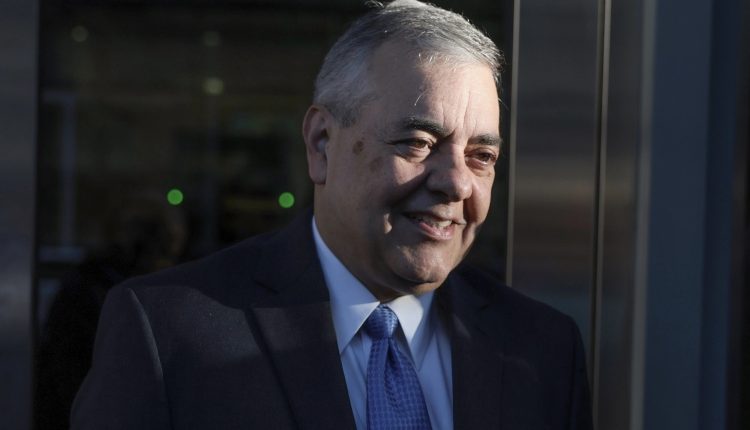
David Rivera’s $50 million Venezuela scandal ends with 10-year prison sentence
The trial revealed how deeply the lobbying effort reached into Republican political circles. Rivera sought to use his connections with Rubio and Texas Rep. Pete Sessions to advance the Venezuelan government’s interests.
Former Miami congressman David Rivera, a longtime friend and former housemate of Secretary of State Marco Rubio, has been sentenced to 10 years in federal prison for his role in a secret $50 million lobbying campaign on behalf of Venezuela during the first Trump administration.
A jury convicted Rivera in May of all counts, including failing to register as a foreign agent and conspiracy to commit money laundering. Prosecutors said Rivera and political consultant Esther Nuhfer secretly worked to persuade the Trump administration to ease sanctions against Nicolás Maduro’s government while concealing their activities to protect Rivera’s political standing as an anti-communist Republican.
The case exposed the complicated intersection of money, political influence, and Miami’s Latin American connections. Rivera’s contract with PDV USA, a U.S.-based affiliate of Venezuela’s state oil company, was central to the prosecution’s argument that a lucrative consulting agreement served as cover for undisclosed lobbying. Prosecutors also alleged that the defendants used backdated documents and sham agreements to disguise transactions, including a $3.75 million transfer to a company that maintained Venezuelan media tycoon Raúl Gorrín’s luxury yacht.
The trial also revealed how deeply the lobbying effort reached into Republican political circles. Rivera sought to use his connections with Rubio and Texas Rep. Pete Sessions to advance the Venezuelan government’s interests. Text messages presented to jurors showed that participants used code names, including “Miss Clairol” for Rubio and “Sombrero” for Sessions.
At sentencing, Judge Melissa Damian rejected Rivera’s leniency arguments and described the case as a classic money-laundering scheme. Rivera’s attorneys maintained that he believed his consulting work did not require registration under the Foreign Agents Registration Act, arguing that the contract involved commercial efforts to bring ExxonMobil back to Venezuela. His lawyers plan to appeal, and Rivera has also sought a presidential pardon.
Rivera’s conviction comes despite his continued support among some influential members of Miami’s Cuban American Republican establishment. Before entering Congress in 2010, he was a prominent Florida legislator and shared a home in Tallahassee with Rubio. He had also faced previous controversies involving campaign finance and allegations that he secretly funded a Democratic spoiler candidate, although federal prosecutors dropped the latter case last year.
The Rivera case raises questions about the use of political relationships for undisclosed foreign lobbying—and about the contrast between Rivera’s public anti-communist image and the secret work for which a jury convicted him.
