
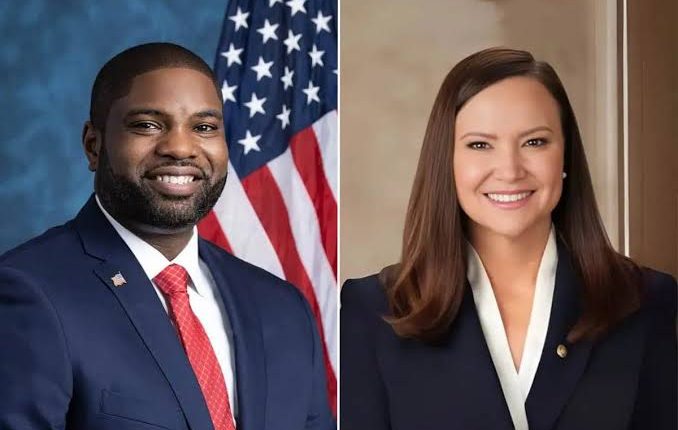
 Byron Donalds and Ashley Moody.
Republicans lead in Florida governor and U.S. Senate races
The survey also asked Floridians about a proposed constitutional amendment concerning property taxes.
A new statewide survey by Stetson University’s Center for Public Opinion Research (CPOR) finds Republican candidates with double-digit leads in Florida’s 2026 races for governor and U.S. Senate as voters prepare for the November general election.
The survey of 830 Floridians, conducted Sept. 14-21, finds Republican Byron Donalds receiving 51% support, compared with 39% for Democrat David Jolly in the race for governor. In the U.S. Senate race, Republican Sen. Ashley Moody receives 51%, compared with 40% for Democrat Angie Nixon. The results include voters who initially said they were undecided but indicated a preference when asked which candidate they leaned toward.
In the race for governor, Donalds leads Jolly by 12 percentage points, with 5% supporting another candidate and 5% undecided. A majority of 60% say they are voting for their candidate rather than against the opponent (19%) or about equally (20%).
The Senate race shows a similar pattern. Moody receives 51% of the vote, compared with 40% for Nixon, a difference of 11 percentage points. Another 3% support a different candidate, and 5% remain undecided. Similarly, 56% say they are voting more for their candidate than against the opponent, 21%, or about equally, 22%.
The results closely mirror CPOR’s spring survey. Moody’s support remains unchanged at 51%, with Nixon rising from 38% to 40%; Donald’s ticks from 47% to 51% against Jolly’s steady 39-40%. None of these shifts exceeds the surveys’ margins of error, suggesting a stable race in which summer campaigning has done little to move the fundamentals, even as the pool of undecided voters has begun to shrink.
The stability also reflects a separate question about whether voters know each candidate and whether they reject them outright. In the Senate race, Moody is the best-positioned candidate tested: 47% of Floridians say they know her and could vote for her, 29% reject her, and 19% don’t know who she is. Nixon faces a different challenge, namely name recognition: 32% of Floridians have never heard of her, 25% know her and reject her, and just 35% know her and could support her.
The governor’s race shows a more symmetric pattern of rejection. About a third of Floridians reject Donalds (32%) or Jolly (34%) outright, and each remains unknown to a sizable share: 21% for Donalds, 25% for Jolly. Still, Donalds holds the edge in openness: 41% say they could vote for him, compared with 35% for Jolly.
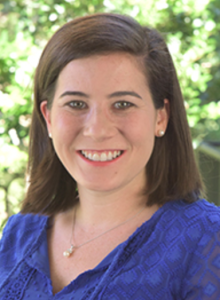
“Republicans hold double-digit leads in both statewide races, and notably, majorities on both sides say they’re voting for their candidate rather than against the opponent,” said Kelly Smith, PhD, an associate professor of political science at Stetson. “That suggests these leads reflect genuine support, not merely negative partisanship, which matters for how durable they may prove in the final stretch.”
Beyond the candidate matchups, the survey also highlights the issues shaping voters’ decisions heading into November. Cost of living and inflation rank as the top concern, with 40% of voters identifying it as the issue that matters most when deciding how to vote in the 2026 Florida elections. Threats to democracy rank second at 10%, while housing affordability ranks third at 9%.
Approval ratings offer another look at how Florida voters view current state officials. Gov. Ron DeSantis has an approval rating of 53%, with 43% disapproving and 5% saying they haven’t heard enough to judge his performance. For U.S. Senator Moody, 50% approve of her job performance, and 32% disapprove, though nearly one in five Floridians (19%) say they haven’t heard enough about the recently appointed Senator to form an opinion.
The survey also asked Floridians about a proposed constitutional amendment concerning property taxes. Respondents were told that the proposal would raise the homestead exemption for non-school taxes to $150,000 in 2027 and $250,000 in 2028, and that it would place restrictions on how local governments may use property-tax revenue. When asked how they would vote if the election were held today, 51% said they would vote yes on the amendment (still below the necessary 60%, even within the margin of error), 25% would vote no, and 24% were not sure.
“The property-tax proposal gives us another important measure of how Floridians are thinking about the decisions before them this November,” Smith said. “The levels of support, opposition, and uncertainty will be worth watching as voters learn more about what the amendment would change.”
The findings point to a clear Republican advantage heading into November. Donalds and Moody hold double-digit leads built on affirmative support rather than opposition to their rivals, and no single bloc of undecided voters is large enough to close the gap on its own. The open question is turnout and whether the property-tax amendment, currently short of the 60% needed to pass, draws voters to the ballot who could reshape the electorate.
