
Delegation exposed human cost of Washington’s Cuba policy
"Someone described it as a 'silent Gaza.'"
A delegation of four Democratic members of Congress has returned from Cuba with a message that cuts through years of political rhetoric: the United States’ energy embargo is causing severe suffering for ordinary Cubans.
According to an Associated Press report, Reps. Mark Pocan (Wisconsin), Teresa Leger-Fernández (New Mexico), Maxine Dexter (Oregon), and Delia Catalina Ramírez (Illinois) spent several days on the island meeting with Cuban President Miguel Díaz-Canel, government ministers, physicians, business leaders, and everyday citizens. What they found was a country struggling to function under an energy blockade that has significantly worsened an already severe economic crisis.
The Trump administration imposed an energy embargo in January after capturing Venezuelan President Nicolás Maduro, while also threatening sanctions against countries supplying fuel to Cuba. The lawmakers said the result has been devastating.
Perhaps the most notable observation was made by Rep. Mark Pocan, who repeated a comparison given to him by a Cuban citizen. “Someone described it as a ‘silent Gaza,'” Pocan said, calling it “an apt description.”
His explanation was sobering.
There may not be bombings, but there are definitely conditions that stop people from going about their daily lives. They can’t go to work, they can’t store their food, they can’t access medical supplies, or live as they did before.
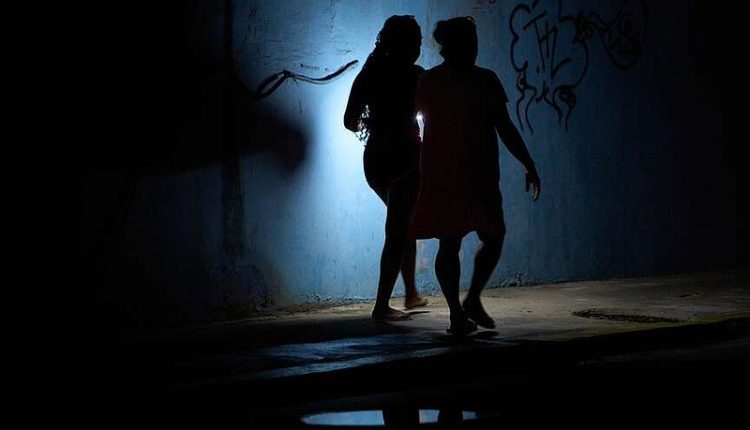
That is the reality of an energy siege. There are no missiles falling from the sky, but there are blackouts lasting more than 20 hours a day, hospitals struggling to operate, food spoiling in refrigerators, public transportation collapsing, canceled flights, shrinking tourism, shortened work schedules, and an economy grinding to a halt.
The congressional delegation emphasized that these are not just theoretical policy discussions. They are about real human consequences.
Pocan also delivered notably sharp criticism of Secretary of State Marco Rubio, who has become the main figure shaping Washington’s more aggressive Cuba policy.
“I think (Secretary of State) Marco Rubio is making this personal and not professional,” Pocan said.
That observation deserves attention.
Rubio has long been one of the most unwavering voices on Cuba. As the son of Cuban immigrants who started his political career in Miami’s hardline exile community, he has consistently pushed for maximum pressure against Havana. But when American policy is shaped more by personal history than by measurable results, it is fair to question whether that policy truly serves U.S. interests or merely extends Cuban suffering.
The delegation acknowledged that contacts between Washington and Havana have taken place, although neither government has publicly disclosed those discussions. They also confirmed that there are currently no negotiations aimed at lifting the energy embargo.
Rep. Teresa Leger-Fernández challenged the entire premise of the policy. “It doesn’t make any sense at all to force a country to suffer,” she said.
Rep. Maxine Dexter, a physician, and Rep. Delia Catalina Ramírez said they plan to pursue legislative efforts that would lessen the embargo’s impact on public health while stopping further unilateral escalation without congressional approval.
Whether those efforts succeed remains uncertain.
What is clear is that four members of the U.S. Congress went to Cuba expecting to assess policy. They came back instead discussing humanitarian consequences.
For years, Washington has claimed that applying more pressure would somehow lead to political change. Instead, according to the lawmakers’ firsthand observations reported by the Associated Press, the main victims remain ordinary Cuban families trying to find food, keep the lights on, get medicine, and simply make it through another day.
