
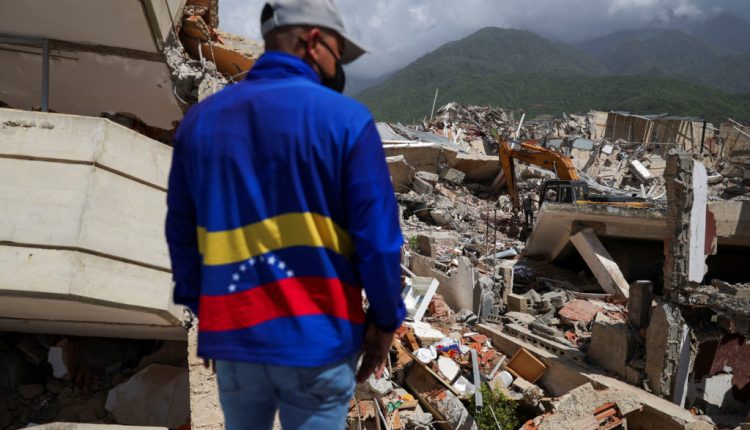
If Washington is governing Venezuela, where is Washington?
When the United States invaded Venezuela, President Donald Trump declared that the United States would run and govern the country...
When the United States invaded Venezuela earlier this year and removed President Nicolás Maduro from power, President Donald Trump declared that the United States would now run and govern the country until a new political order could be established.
That promise is now being tested—not by politics, but by nature.
The devastating earthquakes that hit Venezuela in late June have caused the first major humanitarian crisis under Washington’s leadership. Entire neighborhoods have fallen apart, thousands are now homeless, and rescue teams are still searching through the debris. If the United States genuinely plans to govern Venezuela, this is exactly the moment when that responsibility should be unmistakably clear.
Instead, the response has been remarkably restrained.
According to The New York Times, after Haiti’s devastating 2010 earthquake, the United States mobilized over $3 billion in aid, deployed about 7,000 military personnel, and paused the deportation of Haitians while the country worked to recover.
Venezuela has received a very different response. So far, Washington has pledged about $300 million in earthquake aid, sent roughly 900 troops, and has not announced any suspension of deportations for Venezuelan nationals.
The contrast is difficult to ignore.
Veteran New York Times correspondent Simon Romero, who covered both disasters, described striking similarities between the scenes in Haiti sixteen years ago and those now unfolding in Venezuela.
“Pancaked multistory concrete buildings, bodies flooding into overwhelmed morgues, survivors disparaging government responses, and civilians leading desperate rescues of people trapped in the rubble,” he explained in a Times article.
Romero acknowledged that Venezuela is wealthier than Haiti and has oil resources that Haiti never had. But he also pointed to another reality: American foreign aid has changed drastically.
“The U.S. approach to foreign aid has also changed immensely under the Trump administration,” Romero observed. “Aid to many poor countries, some in humanitarian crises, has been slashed. U.S.A.I.D. has been gutted.”
Perhaps. But this is not simply another foreign aid debate. This is about responsibility.
The Trump administration has repeatedly claimed it now has authority over Venezuela. It manages the country’s institutions and controls access to billions of dollars from Venezuelan oil exports. If Washington asserts the authority to govern, it also takes on the responsibilities that come with governing.
One question, therefore, becomes unavoidable: Where is the money?
As Romero reported, there is “very little transparency regarding Venezuela’s oil revenues.”
Billions of dollars from Venezuelan oil exports are now under U.S. control. Some of these funds were initially deposited in accounts in Qatar before being transferred to U.S. Treasury accounts. Officials have acknowledged that several billion dollars have been approved for Venezuela’s reconstruction, yet even congressional testimony hasn’t clarified how much money is left, who controls it, or exactly how it will be spent.
If these funds belong to the Venezuelan people, why is there so little public accounting?
If they are intended to rebuild the country, why has emergency assistance been so limited after one of the worst natural disasters in Venezuela’s modern history?
Simon Romero correctly warns that rebuilding Venezuela will take years and that concerns about corruption are still valid. No one disputes that aid must be safeguarded from theft or political manipulation.
But accountability cannot be demanded only of Venezuelans.
If the United States claims it is now managing Venezuela, then Americans—and Venezuelans—have every right to demand the same transparency from Washington.
Governing a country is more than just announcing a leadership change. It involves protecting lives during disasters. It requires mobilizing resources swiftly. It means offering clear explanations about public funds. And it entails accepting responsibility when the response falls short of expectations.
The United States once showed it could organize a huge humanitarian effort in Haiti after a disaster. That effort was not perfect, and Romero himself says it did not lead to lasting institutional changes. But no one doubted whether Washington had responded quickly.
Today, the urgency appears absent.
If President Trump intends to govern Venezuela, then governance must go beyond controlling oil revenues or making political appointments. It should also involve standing with the Venezuelan people when they are buried beneath collapsed buildings, sleeping in tents, and trying to rebuild shattered communities.
Otherwise, Washington’s promise to govern Venezuela could seem less like a genuine commitment to its people and more like an assertion over its resources.
