
The US’s role in the tragedy of Brothers to the Rescue
This is the core issue: the United States had both the power and the foresight to prevent this crisis, but it failed to act.
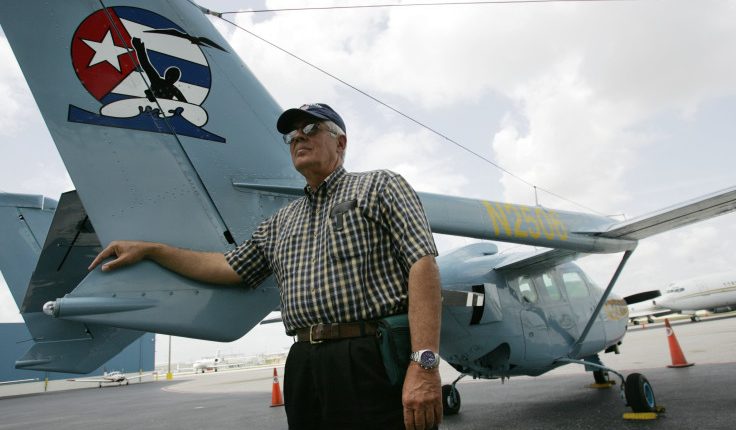
The 1996 shootdown of two civilian aircraft flown by Brothers to the Rescue (BTTR) has often been viewed in stark moral terms: the Cuban government destroying unarmed planes and killing four Cuban American men. That truth is real—and also incomplete. Declassified records from the National Security Archive show a much more troubling reality: the U.S. government, through inaction and bureaucratic hesitation, bears significant responsibility for a tragedy it knew was likely to happen.
This wasn’t sudden; it was a predicted event fulfilled.
For over a year before the shootdown, U.S. officials observed a pattern emerge. BTTR, led by José Basulto, repeatedly crossed Cuban airspace—flying over populated areas, dropping leaflets calling for insurrection, and openly challenging the Cuban government. These were not ambiguous humanitarian missions; even U.S. officials internally described them as “taunting.”
The warnings were clear and frequent. A January 1996 FAA email cited State Department fears of a “worst case scenario” in which Cuba would eventually shoot down one of the planes. That was not speculation—it was expectation. Months earlier, in August 1995, a White House meeting had already identified “a major fear” that Cuban forces would shoot down a BTTR aircraft. The Cuban government, for its part, had lodged repeated diplomatic protests and declared its “firm determination” to defend its airspace.
None of this was concealed. The risk was recognized by agencies, from the FAA to senior officials like Richard Nuccio and Peter Tarnoff. Even the night before the shootdown, Nuccio warned National Security Advisor Sandy Berger that tensions were so high Cuba might finally act.
And yet, the flights continued.
The core issue was not ignorance but enforcement. The Federal Aviation Administration issued warnings, launched investigations, and even thought about suspending Basulto’s license—but stopped short of taking firm action. Despite multiple violations and even false flight plans, BTTR planes were permitted to continue flying. Requests from top policymakers to ground the aircraft were met with bureaucratic resistance. Only after the planes were destroyed did the FAA issue a clear “cease and desist” order, condemning the same behavior it had long overlooked as “careless or reckless.”
This is the core issue: the United States had both the power and the foresight to prevent this crisis, but it failed to act.
The tragedy becomes even more powerful when seen in the context of backchannel diplomacy. According to research by William LeoGrande and Peter Kornbluh, and presented in their book, “Back Channel to Cuba: The Hidden History of Negotiations Between Washington and Havana”, Fidel Castro himself wanted a resolution. In early 1996, he reached a tentative agreement with Congressman Bill Richardson: Cuba would release political prisoners in exchange for a U.S. promise to stop BTTR’s flights. That promise never actually happened in practice.
Instead, Washington sent mixed signals—privately recognizing the danger while publicly permitting provocations to persist. The outcome was a textbook example of strategic contradiction.
None of this excuses Cuba’s decision to use lethal force. The shootdown, carried out under the authority of then–Defense Minister Raúl Castro, could have been handled differently—such as ordering the planes to land or face the consequences of violating sovereign airspace. But recognizing that doesn’t erase another fact: the United States created the conditions that made such a response more likely.
The pilots knew the risk themselves. On the day of the incident, Cuban air traffic controllers warned BTTR aircraft that they were entering a dangerous zone. Basulto responded simply: “We are aware that we are in danger… But we are willing to do it as free Cubans.” It was a statement of escalation.
This is why the National Security Archive’s description of the episode as a “Greek tragedy” is so fitting. Every participant saw where things were headed. Every warning was ignored. Looking back, the outcome seems unavoidable.
But inevitability is often simply the result of avoidable choices.
Ultimately, the shootdown was not just caused by Cuban aggression. It stemmed from a policy failure in Washington—a hesitation to enforce its own rules, to restrain a politically sensitive actor, and to align its rhetoric with its responsibilities. Four men lost their lives not only because Cuba pulled the trigger, but because the United States left the gun loaded, aimed, and waiting.
That is the tougher truth—and the one that still requires accountability.
