
The Alejandro Gil case: The fall of Cuba’s finance czar
Gil was once Cuba’s public face of economic reform, a deputy prime minister, and the architect of a significant 2021 monetary overhaul.
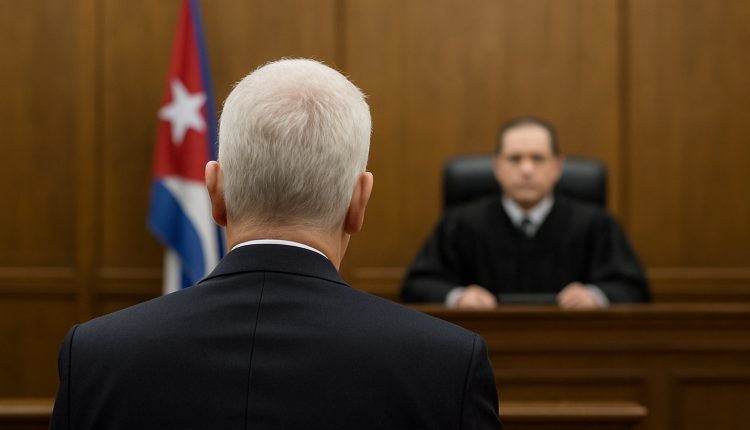
When Alejandro Gil Fernández — once Cuba’s public face of economic reform, a deputy prime minister, and the architect of a significant 2021 monetary overhaul — disappeared from the spotlight in early 2024, few could have predicted the speed and extent of his political downfall. Once praised for tackling the impossible task of saving an economy in free fall, Gil is now accused in one of the most consequential legal cases in Havana in decades: espionage, embezzlement, and a range of financial crimes that the government claims amount to a betrayal of the revolution.
The charges against Gil were made public in late October 2025 after what state authorities described as a lengthy investigation. Cuban prosecutors have accused him — and unnamed collaborators — of offenses ranging from espionage and money laundering to bribery, tax evasion, forgery of public documents, and violations related to classified information. Officials have said parts of the proceedings will be conducted behind closed doors for national security reasons. For many Cubans and outside observers, the combination of financial crimes and espionage raises questions about motive, process, and the message Havana aims to send.
The charges represent a dramatic shift for a technocrat who advanced through the state planning system and was, for a time, the most prominent voice on economic policy in the Díaz-Canel era. Gil’s tenure was defined by the sweeping 2021 currency and price reforms aimed at unifying Cuba’s broken monetary system — measures widely criticized for causing rapid price increases, shortages, and a heavy squeeze on household incomes. The fallout from these reforms made Gil an easy target for public frustration, even before the corruption investigation began.
What exactly happened remains unclear. Official statements from Havana have been vague about details; state media and the prosecutor’s statement outline the charges but provide few documents or named co-conspirators. Independent outlets and Cuban exile media have stepped in to report and analyze, suggesting that the case is both a criminal prosecution and a political reckoning within the revolutionary system. Critics say the lack of transparency — with closed trials, limited access to evidence, and heavy security at courthouses — undermines trust in what could otherwise be a significant anti-corruption effort.
The government, by contrast, presents the prosecution as evidence that the state will not tolerate corruption or negligence at the highest levels. In March 2024, President Miguel Díaz-Canel publicly stated that the matter was under investigation by the police and the Attorney General’s Office. He later announced Gil’s resignation from his Party and parliamentary positions through official channels. Officials maintain that the investigation and any resulting trial are matters of law, not politics.

To understand the importance of the Gil case, it’s helpful to look beyond the allegations to the broader context: Cuba’s economy has been under intense pressure, with contractions, fuel shortages, and inflation fueling popular frustration. In that environment, a corruption scandal at the highest levels of economic management is explosive — both because it reinforces stories of elite impunity and because it risks damaging the fragile legitimacy of the ruling party. Human rights monitors and democracy watchdogs note that prosecuting senior officials for corruption is rare in Cuba, which makes the case significant, regardless of the final verdict.
The combination of espionage and financial crimes adds another layer of complexity. Espionage allegations carry the most severe penalties under Cuban law — and the government’s use of national-security claims to limit public access to proceedings raises painful comparisons for some observers to past purges and trials in which political motives and judicial secrecy were intertwined. Reuters and other international outlets have highlighted connections to high-profile cases in Cuban history that resulted in harsh punishments, underscoring the high stakes in Gil’s trial.
Yet questions remain: what exactly are the alleged espionage acts? Who, if anyone, gained from the supposed financial misconduct? Why did it take over a year for the investigation to become public, and why have the authorities released so few documents? The lack of information has allowed speculation to thrive — an outcome that harms both public understanding and the credibility of Cuba’s institutions.
For analysts of the region, the Gil case is likely to be examined on multiple levels: as law enforcement (an anti-corruption effort), as internal Party politics (a way to discipline the bureaucracy or settle scores), and as crisis management (a method to signal to a restless public that the government is acting). Whichever interpretation proves most accurate, the case will influence Cuban policymaking and public perception for years to come. If the state secures convictions, it will claim victory; if doubts remain about procedures and evidence, the episode could deepen cynicism about accountability in the system it claims to reform.
As the trial proceeds under tight security and restricted access, international reporters and human rights monitors will focus on two main issues: whether the process upholds basic standards of fairness and transparency, and whether the case presents verifiable evidence linking Gil to the alleged crimes. Until those elements are established, the Alejandro Gil case will remain, at best, an incomplete record of alleged misconduct—and, at worst, a warning about how secrecy and political motives can hinder justice.
