
Sanctions on Cuban entities expanded by U.S.
The U.S. Department of State announced a new round of sanctions against 10 Cuban government entities, stating that the measures aim to increase pressure on the Cuban government by restricting organizations that Washington claims finance the state or are involved in political repression.
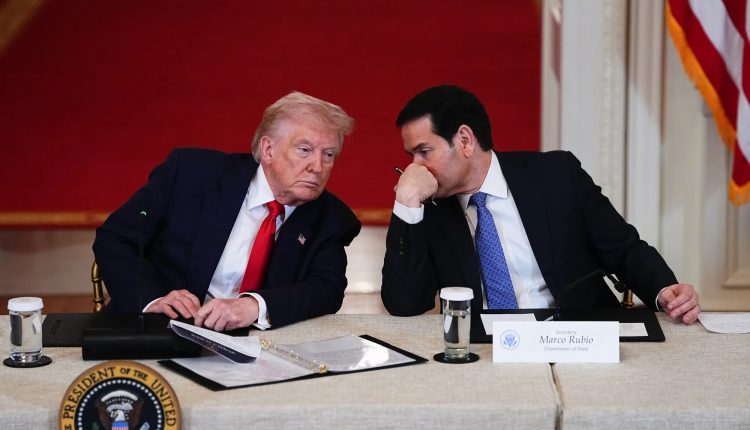
The sanctions were announced as part of the Trump administration’s broader Cuba policy and follow Secretary of State Marco Rubio’s July 11 statement marking the fifth anniversary of the island’s 2021 anti-government protests. In that statement, Rubio said the United States would continue using “every tool at our disposal” to address what the administration considers national security concerns posed by the Cuban government while encouraging political and economic reforms.
Why the Sanctions Were Imposed
According to the State Department, the new designations were made under Executive Order 14404, which authorizes sanctions against individuals and entities determined to be involved in repression in Cuba or activities considered threats to U.S. national security and foreign policy.
The Department divided the newly sanctioned organizations into two categories:
- Organizations it says participate in Cuba’s internal security and repression.
- State-owned entities that generate revenue for the Cuban government.
Organizations Cited for Security and Internal Control
Four organizations were designated because the United States says they contribute to Cuba’s internal security structure.
- Milicias de Tropas Territoriales (MTT) is a part-time civilian militia operating under Cuba’s Ministry of the Revolutionary Armed Forces (MINFAR).
- The Association of Combatants of the Cuban Revolution (ACRC) is described by U.S. officials as a social and paramilitary organization overseen by MINFAR. The State Department says it assists in monitoring political dissidents under the direction of Cuba’s Ministry of the Interior.
- Corporación Antillana Exportadora (ANTEX S.A.) was sanctioned because U.S. officials say it operates under the military-controlled GAESA business conglomerate. The State Department also alleges that ANTEX manages the export of Cuban labor to Angola, which Washington characterizes as forced labor.
- The Rapid Response Brigades, civilian groups organized by the Cuban government, were also designated. U.S. officials describe them as armed para-police organizations used during periods of political unrest.
Economic Entities Added to the Sanctions List
Six additional organizations were sanctioned because the United States says they generate income for the Cuban state.
Among them are two companies involved in Cuba’s energy sector:
- Enetec S.A., which imports and exports fuels and lubricants.
- Coreydan S.A., which imports solid, liquid and gaseous fuels and related products.
The State Department also designated:
- Grupo Empresarial de Comercio Exterior (GECOMEX), a state business group responsible for managing a significant share of Cuba’s foreign trade.
- Organización Superior de Dirección Empresarial Caudal S.A. (CAUDAL), which provides insurance, reinsurance and financial services.
- Grupo Empresarial de Transporte Marítimo Portuario (GEMAR), a major state enterprise involved in Cuba’s maritime transportation sector.
- The Ministry of Tourism (MINTUR), Cuba’s government ministry responsible for regulating the country’s tourism industry.
According to the State Department, MINTUR represents one of the country’s largest tourism institutions outside the military-run GAESA conglomerate.
Legal Basis for the Measures
The sanctions were imposed under Executive Order 14404 and are also part of the broader national emergency framework established under Executive Order 14380, titled Addressing Threats to the United States by the Government of Cuba. The administration also cited National Security Presidential Memorandum 5 (NSPM-5), which outlines U.S. policy toward Cuba, including objectives related to human rights, democratic governance and economic liberalization.
What the Sanctions Mean
Under U.S. law, any property or financial interests belonging to the sanctioned entities that are located in the United States—or are under the control of U.S. persons—must be frozen.
American citizens and businesses are generally prohibited from conducting transactions with these organizations unless authorized by the U.S. Treasury Department’s Office of Foreign Assets Control (OFAC).
The restrictions also extend to companies that are at least 50 percent owned by one or more sanctioned entities.
The State Department warned that foreign companies and financial institutions that conduct certain transactions with sanctioned organizations may also face U.S. sanctions, particularly if they operate in sectors identified by Executive Order 14404, including energy, finance, defense, mining and security.
Possibility of Removal
The U.S. government notes that sanctions are intended as a policy tool rather than a permanent punishment. Organizations placed on the Specially Designated Nationals (SDN) List may petition for removal if they can demonstrate that they no longer meet the criteria for designation. Requests are reviewed by the Treasury Department’s Office of Foreign Assets Control under established administrative procedures.
