
Rubio’s dangerous spin on Venezuela is an insult to democracy — and to the world
His response — that democracy will come later — echoes decades of failed U.S. interventions from Iraq to Libya to Afghanistan.
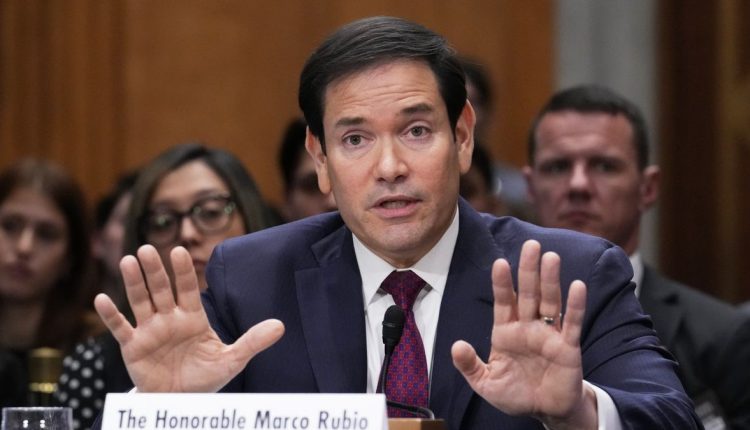
Marco Rubio arrived before the Senate Foreign Relations Committee this week with polished talking points, practiced calm, and a deeply troubling message: Americans, he insisted, should accept regime change by U.S. military force as not only normal, but successful.
According to reporting by the Associated Press, the secretary of state offered an unflinching defense of President Donald Trump’s January 3 military raid in Caracas that removed Venezuelan President Nicolás Maduro from power. Rubio framed the operation as swift, justified, and necessary — a neat narrative that collapses under even minimal scrutiny.
What Rubio presented to lawmakers was not diplomacy. It was salesmanship.
In his testimony, the former Florida senator portrayed Venezuela as safer, the hemisphere more secure, and the United States vindicated for having launched yet another foreign intervention without congressional authorization, international backing, or public debate. That the operation involved U.S. troops storming the capital of a sovereign nation appeared, in Rubio’s telling, to be a footnote rather than a seismic breach of international law.
Rubio’s most revealing moment came when he claimed that the United States is “certainly better off today” than it was four weeks ago. That assertion rests on no evidence beyond administration optimism. Venezuela’s economy remains shattered. Its political institutions remain hollow. And many of the same figures who enforced repression under Maduro are still in charge — merely wearing new titles.
If this is victory, it is a grim one.
The secretary of state attempted to calm fears that the raid could embolden China toward Taiwan or Russia toward Ukraine, dismissing such concerns as overblown. Yet history offers little support for his confidence. When the world’s most powerful nation demonstrates that it is willing to overthrow governments it dislikes, it does not deter aggression — it legitimizes it.
Rubio’s assurances on Greenland and NATO were no more convincing. As Trump continues to openly threaten the territorial integrity of a NATO ally, Rubio waved away allied anxiety as media exaggeration, arguing that negotiations were proceeding productively. The reality is far darker: the United States is now the primary source of instability inside the alliance it once led.
Calling for NATO to be “reimagined” may sound strategic, but coming from an administration that insults allies, threatens tariffs, and treats collective defense like a protection racket, it reads less like reform and more like extortion.
Even more alarming was Rubio’s discussion of Venezuela’s oil — the true centerpiece of the administration’s policy. Under the new arrangement, Venezuelan crude may soon reenter global markets, but the proceeds will be held in a U.S. Treasury–controlled account. Monthly budgets will require Washington’s approval before funds are released.
This is not economic assistance. It is trusteeship.
Rubio attempted to portray this as responsible stewardship to ensure money is spent on health care and policing. But stripping a country of control over its own natural resources while demanding preferential access for U.S. corporations is indistinguishable from colonial management — a fact not lost on Latin America.
Nor is it lost on Venezuelans themselves.
Democratic senators rightly pressed Rubio on whether the United States had simply replaced one autocracy with another. Delcy Rodríguez, Maduro’s former vice president and a central figure in his government, now serves as acting president. Rubio offered no credible explanation for why a figure deeply embedded in authoritarian rule should suddenly be trusted as a democratic steward.
His response — that democracy will come later — echoes decades of failed U.S. interventions from Iraq to Libya to Afghanistan. Democracy, Americans have learned repeatedly, cannot be installed after the smoke clears.
When pressed about Iran, Rubio again leaned on ambiguity: no current plans for attack, but no rejection of regime change either. A carrier strike group has been deployed “defensively,” he said — a word so elastic in Washington that it has come to mean almost anything.
Throughout the hearing, Rubio spoke as though American power were infinite, consequences optional, and history irrelevant.
What was absent was humility.
Absent was acknowledgment of Venezuela’s long trauma under sanctions that devastated civilians more than elites. Absent was recognition that Latin America has not forgotten the Cold War, when similar justifications were used to support coups, juntas, and disappearances. Absent, too, was any serious accounting of the precedent now set: that the United States may remove foreign leaders it deems inconvenient, then manage their economies from Washington.
The Associated Press reported that Rubio closed with a renewed commitment to “legitimate democratic elections” in Venezuela. But democracy does not begin with foreign troops, Treasury oversight, and oil-for-obedience agreements. It begins with sovereignty — the very thing this administration has trampled.
The danger of Rubio’s testimony is not merely that it defends a single military operation. It normalizes a worldview in which American force replaces international law, economic leverage replaces consent, and diplomacy is reduced to compliance.
Rubio did not allay fears this week. He confirmed them.
If this is the future of U.S. foreign policy — louder threats, shorter wars, and permanent instability — then the world is not safer.
It is simply more afraid.
