
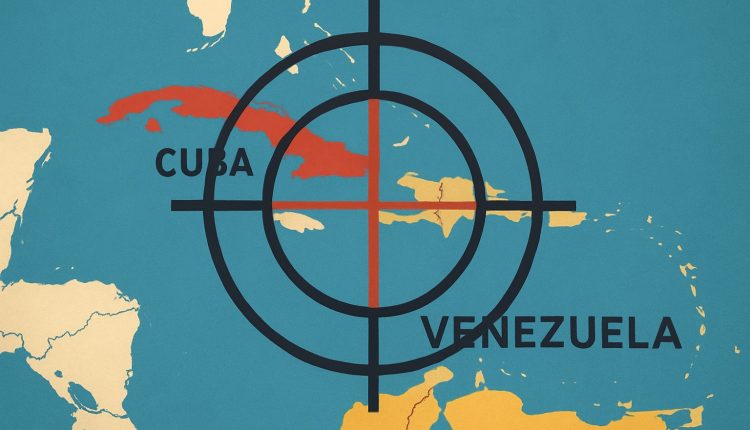
Is Cuba part of the Rubio plan?
Tensions are surging in the Caribbean — and some analysts say what’s happening in Venezuela isn’t just about drugs or democracy.
Tensions are surging in the Caribbean — and some analysts say what’s happening in Venezuela isn’t just about drugs or democracy. It may, in fact, be a calculated play to choke Cuba. At the heart of this geopolitical drama? Secretary of State Marco Rubio.
Recently, the United States has carried out its most significant military deployment in the Caribbean since the Cuban Missile Crisis, according to experts. With a carrier strike group led by the USS Gerald R. Ford and about 10,000 troops already in the area, these escalatory flash points have triggered alarm bells.
Officially, Washington says it’s targeting drug trafficking and narco-violence. But, as William LeoGrande, professor of government and expert on Latin America, and historian Peter Kornbluh argue, the ultimate goal may be regime change. Their concern: by removing Nicolás Maduro, the U.S. could cut off the Venezuelan oil supply to Havana.
Cuba, which relies on Caracas for affordable oil, might be driven into a harmful economic downward spiral. The outcome? A weakened Cuban government, possibly more exposed to external influence.
Cuba’s Stake: Not Just Watching, but Preparing
Caracas’ alliance with Havana isn’t just ideological — it’s based on decades of economic and military cooperation. Cuba has sent medical workers, intelligence advisors, and even military experts to support Venezuela. Analysts worry that if U.S. strikes hit Venezuelan military sites, Cuban lives could be endangered.
Meanwhile, Havana isn’t staying silent. The Cuban foreign ministry has called for global mobilization, warning that U.S. forces aimed at Venezuela would have “incalculable consequences” for the entire hemisphere. Foreign Minister Bruno Rodríguez has accused Rubio of pushing a “maximum pressure” campaign, which he argues is deeply personal and not aligned with President Trump’s stated mission.
![]() Rubio’s Role: Architect of a Legacy Project?
Rubio’s Role: Architect of a Legacy Project?
 Rubio’s Role: Architect of a Legacy Project?
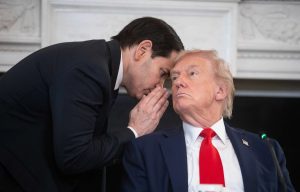
Observers claim Rubio has a significant role in this strategy. As Secretary of State — and National Security Advisor — he now wields the power he has long aimed to shape. According to LeoGrande and Kornbluh, Rubio’s ultimate goal may be nothing less than “the end of Cuba.”
Rubio’s critics — including Cuba’s foreign minister — argue that his agenda is not just political but deeply personal. Rodríguez has publicly condemned Rubio’s escalation as “very personal and corrupt,” warning that it risks sacrificing broader U.S. interests for ideological legacy-building.
Over the years, Rubio has consistently vilified the governments in Havana and Caracas, accusing them of repression, human rights abuses, and regional destabilization. He’s portrayed these governments not just as authoritarian, but as existential threats to a democratic hemisphere.
Realism vs. Ambition: Will It Work?
Despite the strategy’s boldness, experts remain skeptical that it can deliver the intended outcome for these and other reasons:
- Economic counter-pressure might not topple Havana.
Analysts point out that Cuba is less dependent on Venezuelan oil than in past decades. Though losing that support would be painful, it may not be the silver bullet some hawks hope for. - Human pain does not equal political upheaval.
LeoGrande and Kornbluh warn that worsening economic conditions don’t necessarily translate into rebellion — they could also deepen a siege mentality or suppression. - Military risk is high.
A prolonged confrontation could destabilize the region, triggering migration, economic fallout, and even a guerrilla-style conflict in Venezuela, say observers. - Limited Cuban military response.
Despite strong public statements, Cuba itself seems cautious about engaging directly in a U.S.–Venezuela war. According to reporting, its support may be limited to logistics, training, and intelligence — not a full-scale military confrontation.
The Stakes: A Gamble with High Risks
If the strategy works — if Maduro falls and Venezuelan oil production diminishes — it could deliver a long-awaited blow to the Cuban government. However, analysts warn that the costs could be high: for Venezuelans, Cuba, and the U.S. influence in Latin America.
Cuba’s effort to garner international support aims to deflect pressure and avoid a full-scale war. It has allies prepared to back that effort — from Moscow to Beijing.
For Rubio, this is more than foreign policy. Some say it’s his legacy. But for the broader U.S., the gamble may carry unintended and far-reaching consequences.
