
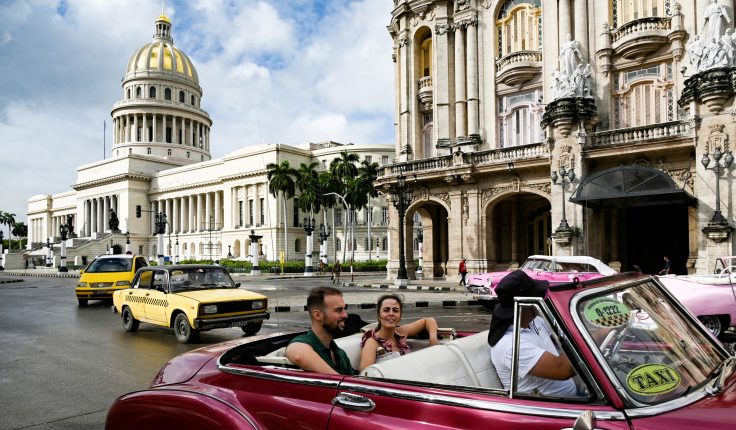
Cuba’s tourism crisis is not an accident
To be sure, Cuba has made mistakes. However, recognizing internal problems shouldn't mean ignoring external pressures.
The vacant hotel lobbies, half-empty beaches, and closed restaurants seen across Cuba today are often used as proof of socialism’s failure. That story is convenient in Washington, but it only shows part of the picture.
Cuba’s tourism industry is indeed in deep trouble. Visitor numbers have dropped sharply, airlines have cut back on flights, international hotel chains are pulling out, and revenue has plummeted. However, any honest discussion of the causes must start with a straightforward fact: few countries in the world have endured the kind of sustained economic warfare that the United States has imposed on Cuba for more than six decades.
Tourism is more than just another industry in Cuba. It is a key source of foreign exchange, providing the hard currency needed to buy food, medicine, fuel, and industrial supplies. When tourism declines, its effects ripple throughout every part of Cuban society.
The latest downturn cannot be understood without considering Washington’s escalating sanctions campaign. In recent months, new U.S. measures have increased restrictions on foreign companies doing business with Cuba, prompting airlines, hotel chains, shipping firms, and financial institutions to reconsider or stop operations on the island. Major hotel operators have announced closures, while international airlines have cut back on flights. Visa and Mastercard transactions have also been disrupted, adding another obstacle for foreign visitors.
Imagine if a powerful foreign government threatened companies that invest in Florida’s tourism industry, discouraged airlines from flying to Florida, restricted financial transactions, and penalized businesses that partner with local enterprises. No serious analyst would then blame Florida’s economic struggles solely on local policymakers.
Yet that is exactly the standard often used for Cuba.
To be sure, Cuba has made mistakes. Bureaucratic inefficiencies, inadequate infrastructure, recurring power outages, and management shortcomings have all contributed to the decline in tourism. The Cuban government is responsible for tackling these issues. However, recognizing internal problems shouldn’t mean ignoring external pressures.
The truth is that sanctions and tourism restrictions aren’t just accidental to Cuba’s economic problems; they are intentionally meant to cause them.
For decades, advocates of the embargo have argued that economic hardship would lead to political change. The policy’s stated goal has been to put pressure on the Cuban government by squeezing the economy. Successive U.S. administrations have tightened travel restrictions, discouraged investment, and sought to curb the flow of hard currency into the island. The suffering that results is not an accidental outcome; it is the mechanism.
The human impact is evident everywhere. When tourists avoid visiting, hotel workers lose their jobs. Restaurant owners see fewer customers. Taxi drivers earn fewer fares. Musicians face smaller audiences. Families experience lost income. The burden doesn’t fall on government officials but on ordinary Cubans trying to make a living.
Ironically, tourism has long been one of the sectors that encourages the strongest people-to-people contact between Cubans and foreigners. Visitors leave with a deeper understanding of the island, its culture, and its people. Limiting tourism does not foster mutual understanding; it weakens it.
Many visitors who keep traveling to Cuba describe a country facing significant challenges but still marked by remarkable resilience, hospitality, and cultural richness. The warmth of ordinary Cubans remains one of the nation’s greatest attractions.
Washington’s tough approach has been used in some form or another for over sixty years. If the goal was to overthrow the Cuban government, it hasn’t succeeded. If the goal was to improve the lives of regular Cubans, the results are even harder to justify.
What has been achieved is the creation of ongoing scarcity, economic instability, and hardship for millions of people.
Cuba’s tourism crisis should therefore be seen not just as an economic issue but as a political one. The island faces real internal problems, but those issues are worsened by a sanctions regime specifically created to limit economic recovery.
The question Americans should ask isn’t whether Cuba has problems. Every country does. The real question is whether intentionally worsening those problems serves any constructive purpose.
After sixty years, the answer appears more and more clear.
