

Cuba news via AI
A quick recap of the news coming out of Cuba in the past months, with information gathered from news outlets and other organizations.
Using Artificial Intelligence, Progreso Weekly has put together a quick recap of the news coming out of Cuba in the past months. Much of the information was gathered from news outlets like the Associated Press, Latin American Reports, Human Rights Watch, Prensa Latina, The Wall Street Journal, the Caribbean Council, Reuters, Al Jazeera, and others.
1. Political & Human Rights Developments
US Sanctions Against Cuban Officials
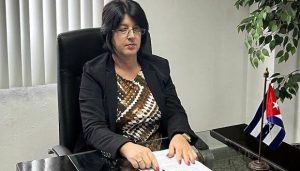
On July 11, 2025, the United States imposed sanctions and visa restrictions on President Miguel Díaz‑Canel, Defense Minister Álvaro López Miera, Interior Minister Lázaro Álvarez Casas, and other officials. These measures target those believed to be responsible for alleged human rights abuses related to the July 2021 protests—the largest in decades—and include accusations of participation in unjust detentions and alleged torture. The sanctions were announced on the anniversary of those protests, amid ongoing tensions over Cuba’s economic crisis and political repression. Cuban authorities strongly condemned the move, accusing the U.S. of meddling in internal affairs.
Cuban Labor Minister Resignation
On July 15, labor minister Marta Elena Feitó Cabrera was dismissed after public outrage over her remark that beggars in Cuba were pretending to be poor. President Díaz‑Canel quickly rebuked her for the comments, leading to her resignation—as rare official self-criticism in state media reflects increasing sensitivity to public frustration amid worsening living conditions.
Transgender Rights Reform
Cuba’s National Assembly approved a groundbreaking law on July 18, removing the need for surgery or a court order to change gender markers on official documents. The reform, praised by LGBTQ+ advocates, updates the civil registry and grants rights to transgender individuals without invasive or burdensome barriers. This law builds on the 2022 Family Code reforms and marks a significant step toward greater inclusion in Cuban civil society.
2. Economic Shifts & Energy Crisis
Private Sector Surpasses State Retail
For the first time since the 1959 revolution, private businesses made up 55% of retail sales by value in 2024—overtaking state-run outlets. This milestone reflects ongoing shortages, high inflation, and structural issues in public distribution. However, analysts emphasize that private retail value is driven by significantly higher prices, not necessarily larger volumes, and state stores remain the primary suppliers of subsidized essentials like food and hygiene products.
Prolonged Energy and Fuel Shortages
Cuba continues to face frequent and systemic power outages. In March 2025, a failure at the Diezmero substation caused a nationwide blackout that affected millions. This was just one of many disruptions linked to fuel shortages, aging infrastructure, and inadequate maintenance. These outages have repeatedly sparked public protests and continue to drive economic decline and public unrest.
Large protests erupted in March 2024 over blackouts and food shortages, and many protesters—including some arrested after the July 2021 protests—remain detained.
3. U.S. Policy Toward Cuba
Reinstating Harsh Sanctions
A June 30 memorandum signed by President Trump reinstated a tough policy toward Cuba—reversing diplomatic and economic openings from previous administrations. It reimposed travel bans, tightened remittance rules, expanded blacklists of Cuban state-linked individuals and entities, and limited permissible travel categories to humanitarian, religious, or educational visits with escort supervision. The goal is to prevent economic benefits from reaching Cuban military-related enterprises and to penalize foreign companies working with them.
Secretary of State Marco Rubio also announced efforts to improve internet access in Cuba to promote free information and reactivated USAID-linked broadcasting operations like Radio Martí, after previous cutbacks.
Relatedly, the U.S. revoked certain immigration protections for about 500,000 Cuban and Caribbean migrants and tightened visa restrictions on individuals connected to Cuban medical missions, which the U.S. called “forced labor.” Cuban officials strongly objected to the characterization.
 Travel and Airline Adjustments
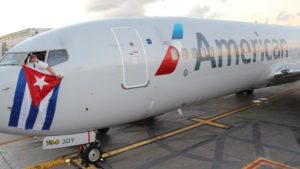
Amid a drop in tourism demand, airlines are reducing U.S.–Cuba routes. United Airlines will suspend flights from Houston to Havana beginning September 2, 2025, for the winter season, and American Airlines is seeking approval to cut back on Miami-Havana and other route frequencies or to exit some airports altogether. These actions are in response to stricter U.S. policies, decreased tourism, and limited visa access.
4. International Engagement & Environmental Diplomacy
Deepening Russia‑Cuban Ties
Cuba is increasing cooperation with Russia. Discussions are ongoing to develop the deep-water Port of Mariel into a regional logistics hub, facilitating Russian exports to Latin America. Russia commits over $1 billion in investments by 2030 to help Cuba’s struggling economy and counter the U.S.–led embargo. The partnership includes military-port visits, fuel shipments, and broader geopolitical efforts through Cuba’s 2025 bid to join BRICS.
Environmental Conference
From July 2–6, Havana hosted Cubambiente 2025, an international environmental conference featuring around 500 delegates from 18 countries. Topics included climate resilience, environmental education, meteorology, biodiversity, and Cuba’s landmark “Task Life” (Tarea Vida) program. The event took place as Cuba navigates increased global tensions and environmental vulnerabilities related to its energy crisis and infrastructure issues.
5. Social Dynamics & Cultural Indicators![]()
Emigration and Social Stress
Cuba continues to experience one of the worst economic crises in decades: shortages of food and medicine, inflation, blackouts, and crumbling infrastructure persist. These conditions have led to waves of emigration and increased public frustration. Human‑rights organizations report ongoing arbitrary detentions and repression, especially of activists or critics. While the government blames U.S. sanctions, it has also shown occasional internal accountability, as seen in the case of the labor minister.
Cultural Resilience
Despite economic hardships, Cubans are turning to different forms of entrepreneurial expression. For example, reports highlight how women are embracing elaborate nail art as a creative way to cope with financial stress—showing persistence, resourcefulness, and a desire to stand out despite scarcity.
📌 Summary
Cuba has experienced rapidly increasing changes in recent weeks, affecting multiple areas:
- Hardline U.S. policy has resumed with renewed sanctions, travel bans, remittance restrictions, and targeted efforts against Cuba’s military-connected economy.
- Economic conditions keep worsening, with private businesses surpassing state retail sales in value and rolling blackouts increasing public frustration.
- A rare ministerial resignation over insensitive remarks indicates growing awareness of public sentiment—but systemic repression of dissent continues.
- On a more progressive note, landmark legal reforms expand transgender rights and modernize identity documentation.
- At the same time, Cuba is strengthening its ties with Russia and aligning itself with BRICS, seeking economic support amid widespread isolation.
- Environmental dialogue is strengthened through international engagement like Cubambiente 2025 as the country faces climate challenges along with energy instability.
Together, these events show a Cuba at a crucial turning point—becoming more isolated from the U.S., facing increasing internal inefficiencies and shortages, and implementing modest social reforms, all while forming new global alliances to adapt.
