
Cuba and the US in their Labyrinth
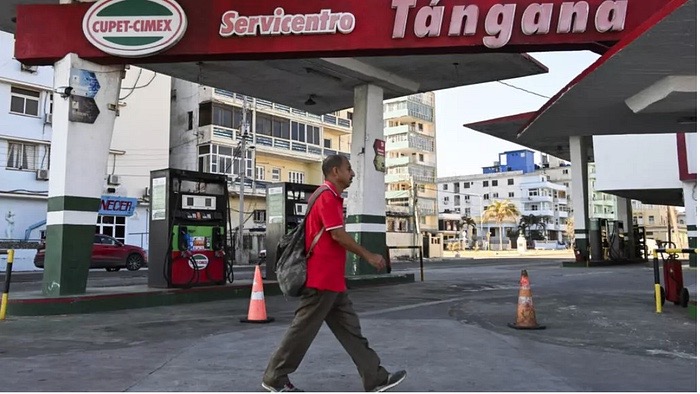
Almost a month after Trump’s Executive Order 14380, which imposed an oil blockade on Cuba, the situation can be summarized as a maze of mixed signals, with no immediate solution or disaster in sight.
- The energy siege began with the ban on Venezuela continuing its supply to Cuba after January 3, which completely cut off an already meager flow in that direction, declining for years prior. The New York Times reported on February 20 about erratic movements of tankers in the Caribbean that, if they aimed to reach the island, were unable to do so. Mexico, the last visible supplier, stopped deliveries.
- The Supreme Court ruling that annulled tariffs under the IEEPA (International Emergency Economic Powers Act) also invalidated order 14380. Trump issued a new order that eliminated the threat of tariffs for oil suppliers to Cuba. What remains of 14380, which declares a “national emergency” due to the Cuban “threat,” is unclear, but it is undoubtedly ongoing pressure.
- As part of its search for options, Cuba broadened the legal margin for private actors to import hydrocarbons. At the same time, the United States permitted the delivery of fuel to private parties, not to the government or the military.
- Cuba can meet a smaller part of its electricity needs with its own oil. Still, even if the exception for private imports is allowed, it’s unclear how the island would get the amounts of crude and derivatives necessary for most production and services.
- Marco Rubio recently outlined a possible way forward: he is not seeking regime change, but rather economic opening on the island (with U.S. businesses presumably waiting in line). The great paradox is that an economic opening plan has stalled in Cuba for nearly a decade due to resistance within the ruling elite, while maintaining normal commercial relations with the United States has been a consistent demand from Havana for decades.
- Amid propaganda campaigns on both sides and unconfirmed leaks about supposed negotiations, Claudia Sheinbaum provided a clue in her February 18 morning press conference: there are conversations to “see if it is feasible” to hold talks between the two governments, the president said. However, it depends on the willingness of the parties “and also on the conditions that, within the framework of its self-determination, the Cuban government may be establishing.” It’s reasonable to assume that a first condition could be nothing other than the lifting of the energy siege.
- Although serious as a violent incident, the armed incursion on a northern Cuban key does not seem to be part of the main story. It appears to stem from the most hardline anti-Castro extremism, but it also acts as a warning that in this conflict, there will always be those who try to prevent any understanding. It’s a smaller repeat of the 1996 shootdown of the “Brothers to the Rescue” planes, which led to the enactment of the Helms-Burton Act, the strongest tool of coercion the U.S. has used against the island for decades.
- As Cuba’s last regular oil supplier, Mexico has become involved in the conflict. It gave in to the threat of halting fuel shipments and was compelled to negotiate with the United States — unsuccessfully — about resuming supplies. It balances pressure from the north and the risks of escalating issues on the island.
