
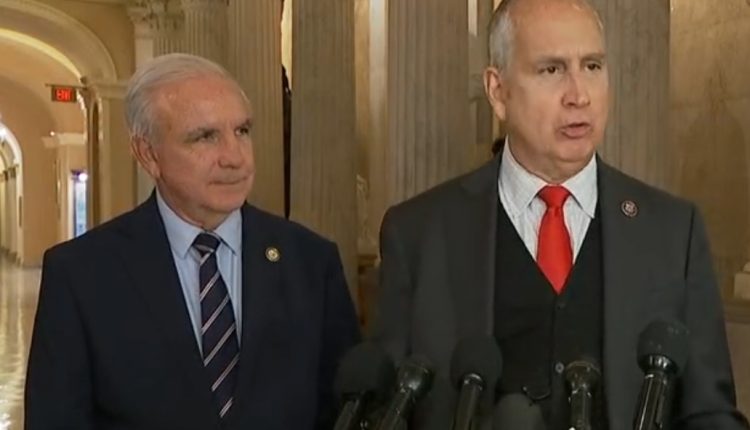
 Giménez and Díaz-Balart.
Díaz-Balart and Giménez serve donor$$, not their constituents
So here’s the question Miami voters should be asking: If this isn’t corruption, what exactly is it?
(Editor’s Note: Florida Bulldog on April 12 published an article titled: Miami-Dade Mayor Levine Cava’s PAC got $100K from Li’l Abner developer, she helped him secure $9 million in affordable housing funding. This publication once wrote that we believed that Ms. Levine Cava might become Miami-Dade’s best-ever mayor. She has not. And we are saddened.)
***
In Miami-Dade County, nearly 3,000 people were pushed out of their homes in Sweetwater’s Li’l Abner Mobile Home Park—many of them elderly, working-class residents who had spent decades building lives in a place they thought they could afford.
They lost everything.
But for two of South Florida’s members of Congress—Mario Diaz-Balart and Carlos Gimenez—the story appears to have had a very different ending.
While residents were being displaced, a private developer connected to the redevelopment project secured $10 million in federal earmarks—thanks to these very same congressmen. Around the same time, according to a detailed investigation by the Florida Bulldog, that developer contributed $400,000 to political committees controlled by Diaz-Balart and Gimenez.
That is not a coincidence. It is a pattern.
A Pay-to-Play System in Plain Sight
The developer at the center of this controversy, Raul Rodriguez, is not a household name. But his financial footprint in Washington is unmistakable.
Shortly after earmark requests were submitted on behalf of his company’s affordable housing project, Rodriguez made six-figure contributions:
- $250,000 to Diaz-Balart’s political fundraising apparatus
- $150,000 to Gimenez’s
Both congressmen certified to Congress that they had “no financial interest” in the project. Technically, that may be true.
But the House Ethics Manual makes something else clear: a political contribution tied to official action crosses into dangerous territory, potentially implicating bribery or illegal gratuities.
So here’s the question Miami voters should be asking: If this isn’t corruption, what exactly is it?
Affordable Housing—For Whom?
Let’s be clear: Miami desperately needs affordable housing.
But the Li’l Abner redevelopment exposes a bitter truth—“affordable” for developers often means unaffordable for the people who were already living there.
The new units being built will largely cater to households earning up to 120% of the area’s median income, figures that can reach well into six figures. Meanwhile, the residents who were forced out—many of them retirees or low-income workers—were offered buyouts as low as $3,000.
Some had invested their life savings—over $100,000—into homes they couldn’t move. They were not part of the future being funded.
Silence in the Face of Suffering
As the evictions unfolded—families crying, elderly residents scrambling, sheriff’s deputies enforcing removals—there was one thing notably absent: Public leadership.
Neither Diaz-Balart nor Gimenez meaningfully spoke out about the crisis affecting their own constituents. There were no press conferences, no urgent calls for relief, no visible advocacy for the displaced.
Why?
Because speaking up would have required confronting the very project they had helped fund—and the donor who helped fund them.
A Career Built on Staying in Power
Mario Diaz-Balart has been in Congress since 2002. Over more than two decades, what has that longevity delivered to the people of Miami-Dade?
Rising housing costs. Displacement. A deepening affordability crisis.
And yet, what it has delivered consistently is something else: campaign money, political entrenchment, and access to power.
Carlos Gimenez, though newer to Congress, appears to be following the same well-worn path—leveraging public office to cultivate relationships with donors who benefit directly from federal action.
This is not public service. It is political maintenance.
The Real Cost of “Business as Usual”
Defenders of earmarks will argue that this is how Washington works—that “community project funding” is legal, transparent, even necessary.
But legality is not the same as legitimacy.
When millions in taxpayer dollars flow to projects tied to donors… When vulnerable residents are displaced without meaningful advocacy… When elected officials remain silent as their constituents suffer…
The system is not working. It is being worked.
Time for Accountability
Miami deserves better.
It deserves representatives who fight for the people being pushed out—not the developers pushing them out. It deserves transparency that goes beyond legal loopholes and ethical technicalities. And it deserves leaders who remember that public office is a responsibility, not a business model.
The story of Li’l Abner is not just about one development.
It is about a political culture in which power protects itself—and the public pays the price.
Until that changes, the question isn’t whether corruption exists. It’s how much longer voters are willing to tolerate it.
