
What the United States wants, and can and cannot do, with Cuba
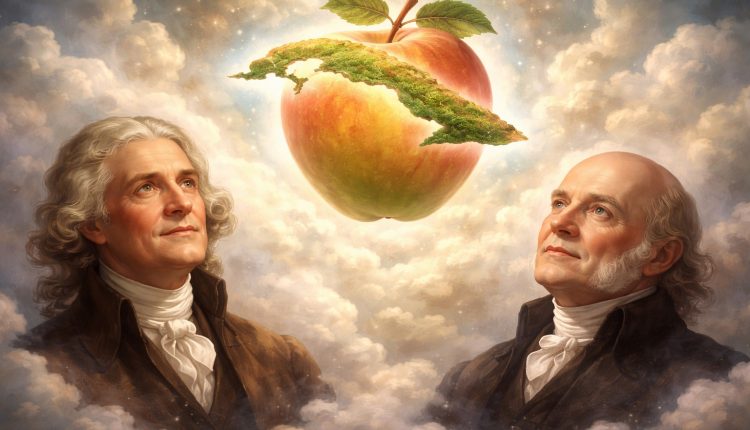
Secretary of State John Quincy Adams introduced the “ripe apple” thesis, predicting that Cuba’s destiny was to fall under U.S. control through a law of “political gravitation.”
The U.S. desire to take over Cuba dates back to the country’s beginnings. As early as 1805, Thomas Jefferson, one of the so-called “Founding Fathers” of the United States, called Cuba “the most interesting addition that could be made to our system of states.”
Barely 20 years later, then–Secretary of State John Quincy Adams introduced the “ripe apple” thesis, predicting that Cuba’s destiny was to fall under U.S. control through a law of “political gravitation.” This came true with the U.S. intervention in Cuba’s war of independence against Spain in 1898.
The original plan was to re-establish control over the country, similar to what Spain did with Puerto Rico and the Philippines—its other colonies lost in the war—but this was blocked by Cuba’s strong independence movement and its history of resistance. As a result, neocolonialism took hold, and Cuba became the world’s first neocolony, defining its unique historical identity and its special relationship with the United States.
Until then, colonial systems of domination had persisted, where a foreign power physically established control over a territory and exercised governmental functions there. However, the rise of the United States as the dominant world power accompanied a process of decolonization that advanced its hegemonic goals by weakening rival powers. What followed was the dominance of neocolonialism—begun with the Cuban experience—as a system of control over dependent countries worldwide.
The main difference between these two systems is the role of the native bourgeoisie. In colonial systems, at least part of this class ends up representing the nation against foreign powers. In a neocolony, its role is to represent foreign powers before the rest of the nation. As a result, while anti-colonial revolutions are led by independent sectors of the native bourgeoisie, anti-neocolonial revolutions are mainly directed against this class because it serves as a proxy for foreign powers.
This was the case with the Cuban Revolution of 1959, the first successful anti-neocolonial revolution in history. This explains both the United States’ stubbornness toward the Cuban revolutionary process and the role of the native bourgeoisie in organizing the counterrevolutionary movement, inside and outside the country, under U.S. support. Added to these contradictions was Cuba’s prominent role during the Cold War, its alignment with the Soviet Union, its support for Third World national struggles, and its adoption of socialism as its political and social system.
Given the intensity of the conflict, many people wonder why the United States has not invaded Cuba militarily, as it has with other countries—especially after European socialism collapsed, causing the Caribbean nation to lose its main political, economic, and military alliances. Part of the answer lies in the demonstrated will of the Cuban people to resist, but also in the calculation that destroying the country through war would not be enough to discredit the Cuban revolutionary model or neutralize its influence.
The strategy has been to prevent the system, at all costs, from developing its economic and social potential; to suffocate the population through economic warfare; and to discredit the political regime to the point that Cubans renounce their revolution and no one elsewhere attempts to replicate the experience. To achieve this, besides direct military invasion, no other subversive resource has been ruled out by the U.S. government and its intelligence services.
Cuba has served as a testing ground for U.S. counterrevolution, and just when it seemed that all options for new aggressive actions had been used up, Donald Trump came in, carrying the proposals of the Cuban-American far right.
His first administration marked a complete reversal of the progress both countries had made in the final years of Barack Obama’s presidency, with over 200 new measures added to the existing economic embargo. The social impact of these actions was worsened by the devastating effects of the pandemic, which drained the country’s economic reserves.
Inspired by the potential collapse of the Cuban political system, Joe Biden’s administration did little to change Trump’s policies. Only the size of the migration wave during those years prompted some mitigation efforts, which Donald Trump reversed again when he returned to power.
What is unique about the current situation for Cuba is the mix of unchecked escalation of aggression during Trump’s second term, a global order in collapse, and the Cuban government’s limited ability to face these realities—also worsened by mistakes and shortcomings accumulated over the past two decades.
Donald Trump has disrupted the traditional balances of the U.S. political system and the ethical standards that are supposed to guide it, as well as the norms of the current international order, revealing the fragility of its certainties.
The initial response was to give in to his bluster, with authorities in different countries flattering his ego to try to calm him. The outcome has been the opposite: the beast was unleashed, turning into a nightmare for the world. However, there are now signs of gaining ground, both inside and outside the United States, aimed at stopping the current U.S. policy from drifting further.
Beyond annexationist goals concerning Canada and Greenland, or tariff spikes that have caused Trump to withdraw when facing powerful interests, two issues appear to have generated the strongest international opposition: the war in Iran and the oil blockade against Cuba.
In Iran, the country’s resistance has cast doubt on Trump’s boasts, a sentiment welcomed by many segments of public opinion. Meanwhile, the economic and security repercussions of that conflict are clear to the rest of the world. In the case of Cuba, however, opposition to U.S. aggression—widely shared both within and outside the United States—does not seem to arise from material or geopolitical interests, but rather from a deeper sense of solidarity with the island, rooted in the collective consciousness of the people and influencing, to varying degrees, their governments’ actions.
Once again, the United States faces in its Cuba policy the dilemma of a paradigm that cannot be eliminated with bombs and Marines. That is why the U.S. government insists the embargo does not exist, and Secretary of State Marco Rubio recently claimed that no punitive measures are being applied to Cuba—even though, for more than three months, not a drop of oil had entered the country because the United States did not “allow” it.
In response to this policy, Cuba’s defense relies on widely shared international solidarity that recognizes the dignity of its emancipation effort and draws inspiration from it. But the building of this consciousness begins within Cuba itself, in the hopes of its own people’s progress. Nourishing it through example and effectiveness is the responsibility of the Cuban government.
The uniqueness of the Cuban Revolution and its global influence, considering the country’s specific circumstances and its confrontation with the United States, means that the Cuban government cannot be judged by the same standards as other nations. In Cuba, it is not true that one government can be easily substituted for another—at least not when considering U.S. intervention in domestic affairs and its hegemonic ambitions. Any failure in governance could be disastrous for the country’s future as an independent and sovereign nation, because there is no other option but to improve itself.
The loss of Fidel Castro was a huge blow to both internal unity and the international standing of the Cuban Revolution. Besides any mistakes that could be blamed on him—which did exist—Fidel acted as a balancing force within the political system and as the source of its ideals. Raúl Castro himself has recognized that Fidel was unique and irreplaceable, and that only the collective leadership of the Communist Party could take his place.
The core of the Cuban government’s management issues lies in the fact that the process of establishing leadership has not been fully completed, exposing the weaknesses of the Cuban socialist system and the challenges of integrating into global geopolitics. Although official discourse refers to “continuity”—which is true for the political structure—the same cannot be said for the economy, leading to counterproductive results in both areas.
“Having a sense of the historical moment” and “changing everything that must be changed” were two of Fidel’s most important maxims in his definition of Revolution, which many consider his political testament. The discourse of continuity, applied “without haste but without pause,” has slowed the structural and functional changes required by the country’s political system—especially in giving greater weight to ongoing public debate, widespread questioning, and participation across social spaces and digital networks in official media and government decisions.
Many argue that this paralysis has also impacted the economic model. It is true that it lacks the comprehensive and accelerated reforms recommended by some of the country’s leading economists. Additionally, there is a persistent tendency to sustain practices and assumptions designed for a world that no longer exists, following the collapse of the USSR and the European socialist bloc. Nonetheless, it is undeniable that successive economic reforms have characterized the Cuban revolutionary process at various stages, and Raúl Castro’s rise to the presidency in 2007 was marked by proposals for broad economic reforms.
Paradoxically, these reforms—known as the “updating of the Cuban economic model,” approved in 2011 during the Sixth Congress of the Communist Party after broad public consultation—have largely not been consistently implemented by the very government that proposed them. Delays in their implementation are blamed for the economy’s inability to respond more effectively to the wave of aggression launched by the United States.
Although there have been some advances in recent months—driven by the deepening crisis—a common view is that some measures have arrived too late, casting doubt on their implementation and highlighting the lack of necessary coordination to incorporate them into a coherent and effective economic reform plan.
The Cuban government is not responsible for the exceptional conditions under which the national economy must operate, shaped by the U.S. embargo, and there is little it can do to change that reality. However, its goal is to govern the country with that reality in mind, anticipate its impacts, and overcome the difficulties it creates. The success of its effort depends on developing that capacity. Marx was right in linking socialism to the development of productive forces; ultimately, viable socialism is the one that the economy can support—everything else is rhetoric.
Donald Trump poses an additional threat to Cuba because he overlooks the strategic, legal, or moral factors that have previously restrained his predecessors from invading the country. The only deterrent would be an opportunistic assessment of the potential costs of such an action and the damage it could cause. Only when convinced it would not benefit his interests might the “best negotiator in the world” consider another approach to dealing with Cuba.
It is up to the Cuban people, through their actions, to persuade him that it is not in his best interest to attempt otherwise.
