
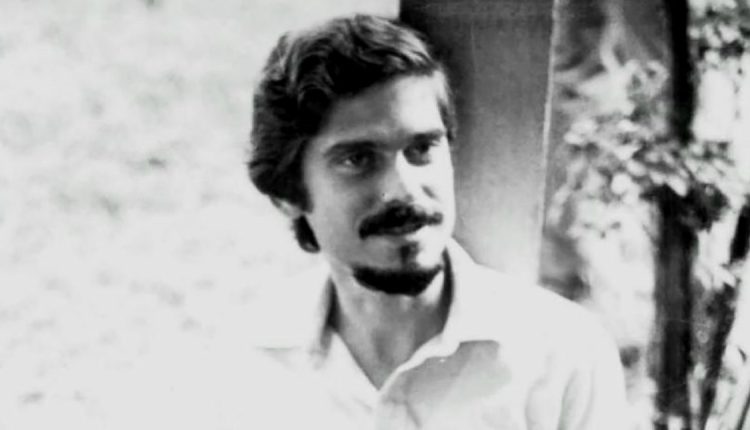
“We’re going to kill you”: FBI report details threats against Carlos Muñiz Varela
WASHINGTON, D.C. – Five months before his assassination, Carlos Muñiz Varela, one of the early pioneers of Cuban exile travel to Havana during Fidel Castro’s government, received an anonymous phone call: “We’re going to kill you.”
The Federal Bureau of Investigation (FBI) recounts this November 1978 threat in a December 3, 1979, report, part of the 47-page report on the Muñiz Varela case that was recently released in response to calls by Puerto Rican Democratic Congresswomen Nydia Velázquez and Alexandria Ocasio-Cortez to declassify documents related to the crime.
The documents provide little new information about the case of Muñiz Varela, co-founder of Viajes Varadero, who was shot on a Guaynabo street on April 28, 1979. He died two days later at age 26.
The key document is the eight-page report from December 3, 1979, that the San Juan office submitted to the FBI director, entitled “Cuban Exile Terrorism.” It confirms that, early in the investigation, Puerto Rican and US authorities had identified at least five potential suspects.
That FBI report was obtained in 2022 by the Committee of Friends and Family of Carlos Muñiz Varela through the federal Freedom of Information Act and was reviewed in very general terms in 2023 by El Nuevo Día.
This time, it only has redactions related to the informants. The important thing is that now it’s not us who are making it public, but the FBI,” said Raúl Álzaga Manresa, spokesperson for the Committee of Friends and Family of Carlos Muñiz Varela, indicating that they are still waiting to find out whether Puerto Rico’s Secretary of Justice, Lourdes Gómez, will release the case file, as requested by the Puerto Rican Senate, or continue the criminal investigation.
Furthermore, Álzaga Manresa—whose committee has obtained significantly more information over the past two decades than the FBI releases at the request of congresswomen—said they are still waiting for the information request that the Puerto Rican Senate has made independently to federal authorities.
Muñiz Varela, Álzaga Manresa, and Ricardo Fraga were the founders of the Viajes Varadero agency, which started organizing trips for Cuban exiles to Havana from San Juan. According to the FBI, “right-wing extremists”—such as the Coordinator of United Revolutionary Organizations (CORU)—responded with acts of violence.
The 47 pages on the Muñiz Varela case were released following a February request for information from Congresswomen Velázquez and Ocasio-Cortez, both elected from New York districts, to the FBI and the CIA asking them to declassify “all documentation” that could help clarify the murders of Muñiz Varela and Santiago Mari Pesquera, son of the historic socialist leader Juan Mari Brás, which occurred half a century ago.
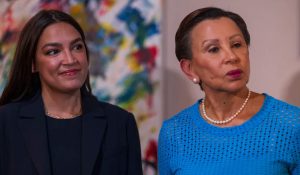
The congresswomen claimed these were instances of “domestic terrorism.”
The CIA responded to that request by saying that other US government agencies “are better positioned” to provide information on such cases. Meanwhile, the FBI, although it released documents on the Muñiz Varela case last month, told the congresswomen it had no information on the murder of Mari Pesquera.
Velázquez and Ocasio-Cortez’s request came after the CIA released documents requested by fellow House Democrats Joaquín Castro (Texas) and Jimmy Gómez (California), which revealed that the federal agency investigated Puerto Rican independence groups and trained Cuban exiles on military land in Vieques in 1960, in preparation for the Bay of Pigs invasion in Cuba, with the goal of overthrowing Castro’s government.
Castro and Gómez’s request to the FBI and CIA was to declassify documents about the persecution of Latinos connected to the civil rights movement in the United States. However, the CIA inexplicably included information regarding the persecution of persons in the Puerto Rican independence movement.
In the December 1979 report, which the FBI submitted with fewer redactions, at least five members of the Cuban exile community are mentioned who may have been, in some way, connected to groups seeking to assassinate Muñiz Varela and executives of Viajes Varadero: Reinol Rodríguez, Ruperto Pérez Ortega, Ernesto Lluesma Parés, Armando Ruiz Maceiras, and Ramón Álvarez Lombana.
The FBI’s San Juan office stated that the information came from its informants and, although it hasn’t been verified by other sources, it shouldn’t be dismissed.
Rodríguez—who, as this newspaper has reported, invoked the Fifth Amendment when then-Department of Justice prosecutor Pedro Tomás Berríos Lara interviewed him in Miami, Florida—is again mentioned as a leader of the CORU.
Other FBI informants have also named Osvaldo Bencomo, Julio Labatut, and Otto Poland as CORU leaders, according to documents previously obtained by the Carlos Muñiz Varela Committee of Friends and Family.
Many of the individuals mentioned by the FBI in relation to the Muñiz Varela case—including documents obtained separately by the Committee of Friends and Family—were interviewed by Puerto Rican authorities.
Of all those listed by the FBI in the December 1979 document, only Rodríguez and Pérez Ortega, residents of Miami, are still alive, according to Álzaga Manresa.
“This entire process shows that there have been many important leads that have not been developed,” added Álzaga Manresa, who noted that they still hope that Puerto Rican and federal authorities will be willing to continue the investigation into Muñiz Varela’s murder and provide any information they may have on the case.
Other documents confirm that federal authorities had Muñiz Varela’s phone tapped. “It took 46 years for the names of the possible suspects involved in the murder and conspiracy to be released,” Álzaga Manresa added.
The 1979 Report
The December 3, 1979, report states that, just as Viajes Varadero was about to start operating in November 1978, Muñiz Varela received a phone call in which an unknown person threatened to kill him.
After the first official trip under the (Cuban Family Reunification) program in December 1978, the right-wing Cuban exile newspaper La Crónica, published in Puerto Rico, started a campaign to discredit the travel agency and its staff,” states the report from the FBI’s San Juan office to its director in Washington, D.C.
In this regard, the first attack against Viajes Varadero took place on January 4, 1979, involving the detonation of a high-powered explosive device.
At that time, the head of the Police Explosives Section, Jesús García, reported that an anonymous caller had contacted radio station WKAQ to say that the “Cézar (sic) Báez” commando had taken responsibility for the attack. The report from the San Juan FBI office suggests they knew who made the phone call but withholds the name.
The FBI report indicates that its San Juan office was unable to establish a link between the call and Muñiz Varela’s murder. However, it mentions another anonymous phone call to WKAQ on May 1, 1979, attributing the murder to the Omega 7 group, and a statement that arrived 20 days later at the United Press International (UPI) newsroom, even threatening to “judge” any Cuban exile who participated in the program, as they did with Muñiz Varela.
Regarding Ruiz Maceiras, the FBI states that the day after Muñiz Varela was shot, he went to work nervously and asked his employer to say, if asked, that he had been working late that day. The FBI document shows that his employer warned him that he would not lie.
Interviewed by the Puerto Rican Police, Ruiz Maceiras denied knowing anything about the murder. The police later told the FBI that Ruiz Maceiras had been at his home all day on April 28, 1979. However, the FBI state in the December 1979 report that he might have been involved in the conspiracy and supplied a weapon to Lluesma Parés.
The informant cited by the FBI also provides information on other potential suspects at the time, including Álvarez Lombana—whom the FBI source mentions as early as May 15, 1979, two weeks after the assassination—and Pérez Ortega.
