
The ‘bosses’ from Miami
From the CIA’s “golden boys” to the 'bosses' from Miami: the continuity of an elite that has made subordination to the United States its political project for Cuba.
In the 1960s, the CIA used to refer to its best Cuban agents as “golden boys.” They were, for the most part, young men from good families, educated in elite private schools, with time spent in the United States, admirers of its system, and convinced anti-communists.
They were recruited by the thousands. Some made careers as professional agents; others, under the protection of the impunity guaranteed by the U.S. government, ended up forming part of one of the most active and lethal terrorist networks in the world. But there was a group that read the moment better: they used their contacts and available resources to climb the ladder and become Miami’s “bosses.”
Decades later, when the Ronald Reagan administration promoted the creation of the so-called “mother of counterrevolutionary organizations,” and Miami’s most prominent businessmen advanced the Cuban American National Foundation (CANF), it did not go unnoticed that most of its leaders had known ties to the CIA. Today, many of those figures have died or retired, but their successors continue to occupy positions of influence and benefit from a “counterrevolutionary function” that the United States has consistently delegated to the Cuban emigration.
With support from both political parties, they climbed to positions in U.S. politics, reaching high levels of national influence and becoming part of the American establishment. In doing so, they achieved what had long been an aspiration of important sectors of Cuba’s native bourgeoisie: to annex themselves, body and soul, to the United States.
In the face of Spanish colonialism, the Creole bourgeoisie adopted diverse political positions. Its most progressive sector helped shape Cuban nationality and led the struggles for independence, sacrificing wealth and life in the process. Influenced by the emancipatory example of U.S. independence, some proposed annexation to the United States as a future option for Cuba; however, this was a fleeting moment that faded once the war began and was never again considered a patriotic alternative.
Where annexationism gained relevance was among large landowners, who saw their interests threatened by the prospect of independence. José Martí called them “Seven-month men” for their lack of confidence in Cubans’ ability to govern themselves and considered them a strategic danger to the nation, as a serious and continuous factor in Cuban politics.
Once independence from Spain was achieved in 1902, annexationism ceased to be a national alternative. This was due first to the strength of the Cuban independence ideal, but also to opposition from powerful U.S. economic groups, who rejected incorporating the island on equal footing with U.S. states. The adopted formula was the imposition of a neocolonial model, and the annexationist ideal of the native bourgeoisie mutated into “Plattism,” a term used to describe those who collaborated with foreign power within the nation.
With the triumph of the Revolution in 1959, as had occurred during the independence wars, the poles of Cuban political life were defined by two powerful, opposing currents: the revolutionary movement, carrying a radical nationalism, and a counterrevolution that, from its origin, became an instrument of U.S. interests.
Those who would later become Miami’s ‘bosses’ played a decisive role in the U.S. plan to turn that city into an alternative Cuba, capable of attracting those who wished to emigrate, whatever their reasons. As a result, these emigrants became the social and operational base of policy against Cuba, a representation of the Latin American right in the United States, and one of the most reactionary population groups in that society.
This has occurred regardless of individuals’ will or awareness. The reasons that led them to emigrate do not matter, nor their true political leanings or their interest in maintaining cordial relations with their country of origin; in the eyes of public opinion, their national origin has been used to confer “ethnic legitimacy” on counterrevolutionary activity.
When Cubans emigrate, they do not cease to be Cuban: whether they want it or not, a powerful national identity accompanies them. This has not prevented their integration into a multiethnic society like that of the United States, as long as they have done so as Cuban Americans, a condition that does not necessarily make them enemies of their country, but which has been functional to a fictitious patriotic representation widely used by U.S. policy against Cuba.
Conditioned by confrontation, one of the shortcomings of Cuban policy has been to confirm that construction is carried out through separation and indiscriminate rejection of emigrants, even alienating the potential contributions of many valuable individuals. Although there has been a sustained effort since the late 20th century to correct this situation, and rationality has led to important adjustments, these have not been enough to eradicate prejudices that often limit the proper implementation of policies aimed at strengthening the ‘Cubanness’ of emigrants and integrating them into national life.
The counterrevolutionary movement has never sought to overthrow the Cuban government and take power with its own resources, but rather to create conditions for a U.S. intervention. The Helms-Burton Act, which codifies the policy of aggression against Cuba, makes clear that the objective is to occupy the country and establish a U.S. “protectorate.” At present, this goal is being revived under particularly dangerous conditions.
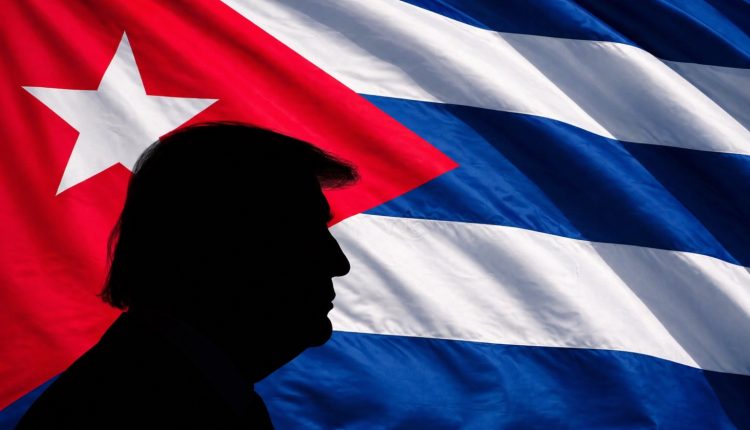
Among his many excesses, Donald Trump has even spoken of invading Cuba, while Miami’s ‘bosses’ aspire to arrive in the rear guard, landing once the Marines have “pacified” the country and the United States appoints them as rulers of Cuba. It would be the height of Plattism—but the opposite could also occur.
If someone were to convince Donald Trump that such an adventure is too risky for his interests, he might move in another direction and compete with the legacy of his nemesis, Barack Obama, by promoting a better negotiated opening with Cuba, as he hinted before becoming president and still suggests today.
In that scenario, it might be thought that Miami’s ‘bosses’ would be sidelined, disconnected from new developments. However, it is not so simple: gauging the adaptability of these actors is difficult, and it would not be surprising if some chose confrontation rather than becoming champions of improved relations between the two countries. “You shall see strange things,” Alfonso VI would say, while history is yet to be written.
