
Reform or ruin: Cuba’s narrow path forward
The country’s predicament is the product of a punishing convergence of external pressure and internal dysfunction.
Editor’s Note: This op-ed was inspired by an article by Carlos Alzugaray Treto, originally published in La Joven Cuba.
***
Cuba stands at one of the most perilous crossroads in its modern history. That is the stark warning issued by retired diplomat and scholar Carlos Alzugaray Treto: reform the system and overcome the crisis — or refuse reform and risk collapse. His argument, sober rather than alarmist, reflects a reality increasingly visible to anyone who follows events on the island or listens to Cubans themselves.
The country’s predicament is the product of a punishing convergence of external pressure and internal dysfunction. For more than six decades, U.S. sanctions have constrained trade, finance, and development. Those measures were tightened significantly during Donald Trump’s administration and remain heavily influenced by hard-line policymakers such as Marco Rubio. At the same time, Cuba’s own economic policies — including excessive centralization, bureaucratic inertia, and delayed reforms — have compounded shortages of food, fuel, electricity, and medicine. To attribute the crisis solely to Washington or solely to Havana is to overlook how these forces reinforce one another.
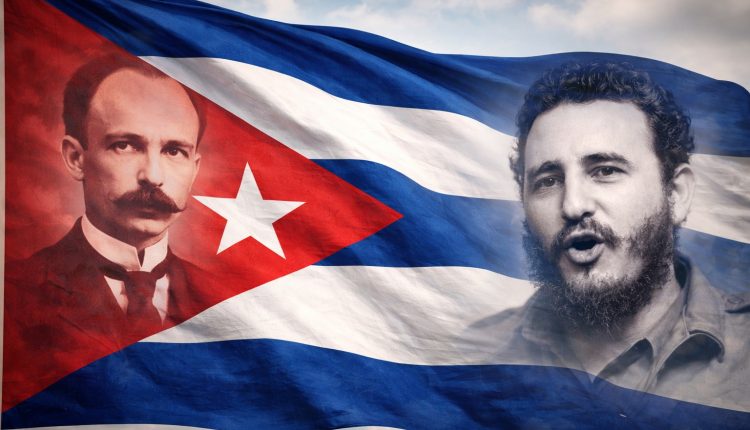
Ordinary Cubans feel the consequences daily. Hours-long blackouts, empty store shelves, declining purchasing power, and a mass exodus of working-age citizens have eroded public confidence. Some citizens now openly question whether the revolutionary project can still deliver a dignified life. Others remain deeply committed to the ideals of sovereignty and social justice championed by national figures such as José Martí, viewing resistance to foreign domination as a moral imperative even amid hardship. A third group, exhausted by years of crisis, places its hopes in outside intervention — a sentiment born less from ideology than from desperation.
President Miguel Díaz-Canel has acknowledged the severity of the situation and spoken of necessary “changes” and “transformations.” Yet he has stopped short of proposing comprehensive structural reform. History suggests that incremental adjustments are unlikely to reverse systemic decline. In the early 1990s, faced with the collapse of Soviet support, Fidel Castro legalized foreign currency, opened limited space for private enterprise, and welcomed foreign investment. Later, Raúl Castro expanded self-employment, decentralized agriculture, and liberalized migration. Those measures did not abandon socialism; they prevented economic freefall and bought time.
Alzugaray contends that today’s debate is not between socialism and capitalism but between adaptation and paralysis. Systems that refuse to evolve risk implosion from within. The Soviet Union’s experience illustrates the danger of postponing reform until stagnation becomes irreversible. By contrast, China and Vietnam pursued market-oriented reforms while maintaining political continuity, lifting hundreds of millions out of poverty and strengthening national power. Cuba’s circumstances differ, but the lesson is clear: ideological rigidity can be as destructive as external hostility.
Opponents of reform often invoke revolutionary purity or warn that opening the economy would inevitably lead to inequality and loss of sovereignty. Some cite the writings of Rosa Luxemburg to argue that reformism dilutes transformative goals. Yet Argentine scholar Atilio Borón has argued persuasively that treating socialism as an immutable doctrine produces “suicidal immobility.” A system incapable of correcting its own errors ceases to be viable, regardless of its founding ideals.
The risks of inaction extend beyond economic hardship. If state institutions cannot ensure basic well-being, social cohesion frays, and emigration accelerates, depriving the country of human capital essential for recovery. Moreover, a weakened state may become more vulnerable to the very foreign influence it seeks to resist. Collapse rarely produces orderly renewal; it often invites chaos, dependency, or authoritarian alternatives.
Meaningful reform would require difficult decisions. Economically, it could involve granting greater autonomy to state enterprises, encouraging small and medium-sized private businesses, liberalizing agriculture to boost domestic production, and creating incentives for investment from the Cuban diaspora. Politically, gradual adjustments that increase transparency, accountability, and citizen participation could rebuild trust without destabilizing governance. None of these measures guarantees success, but their absence virtually guarantees continued decline.
Crucially, reform is not synonymous with capitulation. Many nations have modernized their economic systems while preserving core social achievements. Cuba’s universal healthcare, high educational attainment, and strong national identity remain valuable assets. The challenge is to sustain those gains amid scarcity and global competition.
Ultimately, the island’s future will be decided not in Washington but in Havana — by Cuban leaders’ willingness to confront reality and Cuban society’s capacity to demand constructive change without descending into polarization. External actors can influence conditions, but they cannot substitute for domestic consensus and competent governance.
Alzugaray’s warning is therefore both analytical and moral. Reform carries risks, including uncertainty and potential disruption. But the alternative — unmanaged collapse — would almost certainly bring far greater suffering and loss of sovereignty. Between those two outcomes lies a narrowing window of opportunity.
History rarely offers nations unlimited time to correct course. Cuba’s dilemma is urgent precisely because delay itself has become a decision. Reform or ruin is not a rhetorical flourish; it is a choice that will shape the destiny of millions.
