
 Image by Selline Selline from Pixabay.
Florida’s $6 billion blind spot and the man calling it out
At the heart of this story are hundreds of so-called “emergency” deals, awarded without competitive bidding, whose documents have vanished from Florida’s public contract database.
When Florida Governor Ron DeSantis promised that “transparency is no longer optional,” Floridians might have expected a new era of open government. Instead, a deep dive by Florida Bulldog, the nonprofit investigative newsroom known for holding the powerful to account, found that the governor’s own administration has quietly failed to comply with one of the state’s core transparency laws—leaving more than $6 billion in state contracts missing from public view.
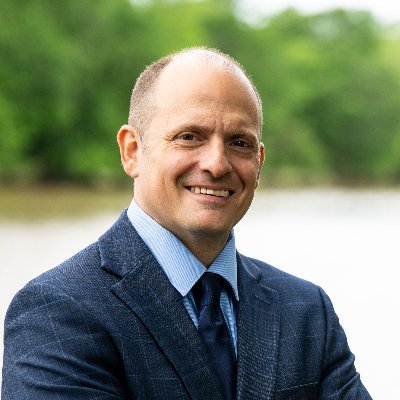
At the heart of this story are hundreds of so-called “emergency” deals, awarded without competitive bidding, whose documents have vanished from Florida’s public contract database. And standing at the opposite end of that opacity is former state senator José Javier Rodríguez, one of the original architects of Florida’s transparency law—and now one of its most vocal defenders.
The Law That Wasn’t Followed
The Transparency Florida Act, which Rodríguez co-sponsored in 2013, was designed to ensure that citizens could monitor how every public dollar was spent. It required agencies to publish all contracts on the state’s online database, the Florida Accountability Contract Tracking System, within 30 days of signing them.
But Florida Bulldog’s investigation found that 719 emergency contracts—worth over $6 billion—still lack public copies uploaded years after being signed. Many originated directly from the Executive Office of the Governor, including the influential Division of Emergency Management, and nearly all were no-bid awards to politically connected firms.
Without access to the contracts, the public cannot see how the money was spent—or if taxpayers received fair value. “Transparency was supposed to be a cornerstone of government accountability,” Rodríguez told Florida Bulldog. “Instead, we have a system that has gotten drunk on emergency powers.”
The Emergency That Never Ended
The DeSantis administration has extensively used “emergency procurement” powers—intended for genuine crises like hurricanes or pandemics—to bypass the usual bidding process. Those powers, Rodríguez argues, have become a loophole large enough to funnel truckloads of taxpayer dollars.
According to the Bulldog’s findings, many of the missing contracts originate from declarations related not only to storms and the COVID-19 pandemic, but also to an ongoing “emergency” over mass migration, declared by DeSantis in 2023. Since the start of his second term, nearly $2.4 billion in “emergency” contracts have been awarded, three out of four of which lack the legally required documentation.
“Emergency powers were supposed to be temporary tools,” Rodríguez said. “But this administration turned them into a permanent funding mechanism for friends and donors.”
The Donor Pipeline
Two names stand out among the beneficiaries: CDR Maguire from Miami and AshBritt of Deerfield Beach.
CDR Maguire, led by married executives Carlos and Tina Vidal-Duart, has secured over $537 million in contracts from the state. The couple and their firms have contributed nearly $2 million to political action committees supporting DeSantis and the Florida GOP. They also served on the finance committee for his unsuccessful presidential campaign.
Meanwhile, AshBritt and its affiliated companies have received $286 million in emergency contracts. The late founder, Randal Perkins, and his family donated to DeSantis’s campaigns. At the same time, the company directed another $270,000 to the Republican Governors Association, which then contributed over $13 million to DeSantis’s re-election effort.
Both companies insist that their work is legitimate and transparent. However, as Florida Bulldog points out, without the actual contracts uploaded to the state database, the public cannot verify the terms or the bidding process—if there was one.
Rodríguez, who built his political career on ethics reform, states the pattern is clear. “It’s a feast for politically connected donors who want to get their hands on no-bid contracts,” he said.
The Watchdogs Who Look Away
The state’s Chief Financial Officer, Blaise Ingoglia, is legally responsible for managing the contract tracking system. DeSantis appointed him in 2024, calling him “our fiscal warrior.” Ingoglia has been traveling across the state, criticizing local governments for wasteful spending.
But when it comes to the governor’s own office, Florida Bulldog found little evidence of oversight. Since Ingoglia took office, the Bureau of Auditing under his direction has reviewed only three contracts from the governor’s office—worth less than $600,000 in total. The last time the office audited the Division of Emergency Management was in 2013.
“It’s hypocrisy, plain and simple,” Rodríguez said. “Politicians are preaching accountability to everyone else while turning a blind eye to billions in unaccounted spending.”
The Hope Florida Connection
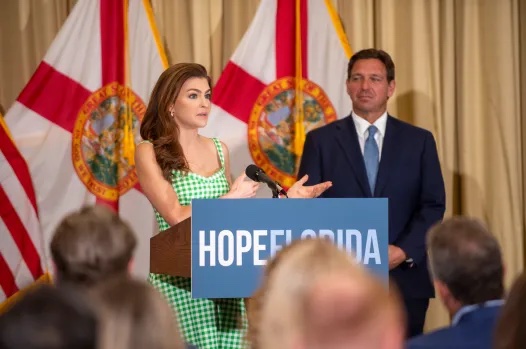
Transparency advocates also highlight the “Hope Florida problem”—a charitable effort led by Casey DeSantis, the governor’s wife, which has faced scrutiny over blurred lines between public duties and private fundraising.
Rodríguez states that Attorney General James Uthmeier, a DeSantis appointee and former chief of staff, is at “the center of this corruption.” He has called for a review of all state contracts over $1 million—a task that would directly fall under the attorney general’s office if he’s elected next year.
“We don’t have an attorney general with any independence,” Rodríguez said. “That’s why no one is enforcing these transparency laws.”
A Vision of Accountability
Rodríguez’s push for open government isn’t new. As a state senator, he fought for consumer protections and ethics reforms, often clashing with his own party’s leadership and the governor’s office. Now running for Florida Attorney General, he says restoring public trust starts with enforcing the rules already in place.
His plan, he says, is simple but bold:
- Conduct a comprehensive audit of all state contracts over $1 million.
- Create a public integrity unit within the attorney general’s office, independent of the governor.
- Mandate real-time publication of contract documents, not just summaries or database entries.
“This is not about politics,” he said. “It’s about whether Floridians can see where their money goes. If the governor says transparency isn’t optional, then let’s make sure it’s not optional for him either.”
The Bulldog’s Bite
Florida Bulldog’s reporting has highlighted how investigative journalism—often underfunded and overlooked—acts as the last line of accountability in Florida politics. Their analysis of nearly 1,000 emergency contracts reflects months of meticulous data work, the digging that larger news organizations are increasingly hesitant to undertake.
The DeSantis administration refused to answer Florida Bulldog’s repeated questions about the missing contracts since 2020. Even now, officials continue to respond selectively—answering other questions in the duplicate emails while ignoring those related to transparency.
In a state that loves to tout itself as a model of efficiency and freedom, that silence speaks volumes.
The Last Word
For José Javier Rodríguez, the issue isn’t partisan—it’s moral. “We cannot allow public service to become a private business model,” he said. “Floridians deserve a government that works for them, not for the insiders who bankroll campaigns.”
As the state races toward another election season, the missing $6 billion in “emergency” contracts remains unaccounted for. But thanks to Florida Bulldog’s reporting—and Rodríguez’s unwavering focus on the rule of law—the fight for transparency in Florida isn’t over yet.
If Rodríguez gets his way, it’s only just beginning.
