
A new template for conflict, but Cuba poses the same old questions
Operationally, all-out war with Cuba would end quickly. Politically and humanly, it would not end at all.
Let’s examine the recent United States military strike on Venezuela not only as a spectacle but as a test case. What happened in Caracas in early January was not simply the removal of Nicolás Maduro. It was a demonstration, to Cuba and the world, of how quickly modern U.S. military power can neutralize Russian-built defenses, but also of how little that dubious achievement settles once the smoke clears.
That reality matters more than ever because of Trump’s renewed aggression toward Cuba. “THERE WILL BE NO MORE OIL OR MONEY GOING TO CUBA – ZERO!” Trump posted on his Truth Social platform. “I strongly suggest they make a deal, BEFORE IT IS TOO LATE.” Venezuela, in other words, was not an isolated episode. It was a rehearsal. Cuba’s president, Miguel Diaz-Canel, vowed to defend the country. “Cuba is a free, independent and sovereign nation. No one tells us what to do,” Diaz-Canel wrote on X, adding that the island nation was “ready to defend the homeland to the last drop of blood.”
Shortly before dawn on January 3, U.S. special operations forces, backed by aircraft and helicopters, struck military installations and command centers across northern Venezuela. Targets in Caracas and the port of La Guaira were hit almost simultaneously. The incursion, labeled Operation Absolute Resolve by U.S. officials, combined airstrikes with rapid direct-action raids that quickly collapsed Venezuelan defenses. Maduro and his wife, Cilia Flores, were quickly taken into custody. U.S. officials reported no American fatalities and only minor injuries. Venezuelan authorities acknowledged dozens of military deaths, including at least 23 security officers and 32 Cuban personnel assisting the Maduro government. Civilian casualties were also reported, bringing the total to as many as 75 to 100, and visible damage from explosions and munitions was documented in several urban areas. Acting President Delcy Rodríguez declared a week of national mourning.
The operation’s eye-opening feature was the speed with which Venezuela’s advanced air defenses ceased to matter. Despite years of investment in Russian-supplied systems, including Buk-M2E surface-to-air missiles, those defenses were neutralized almost immediately. New evidence has surfaced, however, that Venezuelan forces were unprepared and incompetent, some components were still in storage and not deployed, and antiaircraft systems were not connected. Russia shared in the failure because its trainers and technicians had not ensured the system was well-maintained and operational. This made it easier for U.S. forces to prioritize radar suppression and missile-site destruction, relying heavily on stealth aircraft and electronic warfare. Venezuelan batteries were disabled before they could impose meaningful costs. No U.S. aircraft were lost to enemy fire.
What followed has been less tidy. Maduro’s removal did not resolve Venezuela’s underlying crisis. Economic collapse, contested legitimacy, and social fracture did not disappear with the arrest of one man. While Maduro and Flores now face federal charges in the United States and an interim government under Delcy Rodríguez claims authority, the situation on the ground remains volatile. Armed pro-government militias, the colectivos, continue to patrol neighborhoods and set up checkpoints in parts of Caracas. Their activities have fueled insecurity and prompted U.S. officials to urge American citizens to leave the country.
International reaction was swift and polarized. Governments across the Global South condemned the intervention as a violation of sovereignty and international law. U.S. allies issued cautious statements urging restraint. Russia, China, Iran, and several Latin American states lodged formal protests. The United Nations convened emergency discussions that produced no consensus but plenty of condemnation like dust in the wind.
From a strictly military standpoint, the operation was a success for the United States. From a political standpoint, it remains unresolved. Stabilization is not following partial regime decapitation. Democratic renewal shows no sign of materializing. Trump expressed doubt regarding opposition leader María Corina Machado’s ability to lead the country, and has not even mentioned the presumed winner of the election that Maduro is accused of stealing: Edmundo González Urrutia, who was Machado’s stand-in. Institutions remain weak, opposition forces fragmented, and economic dislocation unchanged. Analysts note that aside from the absence of Maduro himself, Venezuela’s basic configuration of power and tension looks disconcertingly familiar. Not even Trump’s plan to steal Venezuela’s oil seems a sure thing, given the reticence of American oil executives to get involved and risk as much as $100 billion to repair the installations and pump the oil.
There is a lesson Cuba cannot ignore. Air defenses, even if they look formidable on paper, can be dismantled quickly by a technologically superior force. Heads of state can be removed without mass occupation. But there’s another lesson the United States cannot ignore either: decapitating a government is different from restructuring a society. The lessons of Vietnam, Iraq, and Afghanistan have been forgotten.
In Cuba, the consequences would almost certainly be worse than in Venezuela, since only an invasion will satisfy right-wing and vociferous anti-Cuba hawks such as Secretary of State Marco Rubio and U.S. Representative Maria Elvira Salazar, members of a cohort that has been unsuccessfully implementing the pressure cooker theory on Cuba for 65 years with the goal of complete regime change.
By conventional military standards, a U.S. invasion would be brief in its first stage. Pentagon planning documents have long concluded that U.S. forces could establish control of a small nation’s airspace and surrounding waters within days, relying on stealth aircraft, naval aviation, electronic warfare, and precision-guided munitions, according to the criteria spelled out in the U.S. Department of Defense, Joint Publication 3-01: Countering Air and Missile Threats, 2023, citing the tactics of Operation Desert Storm.
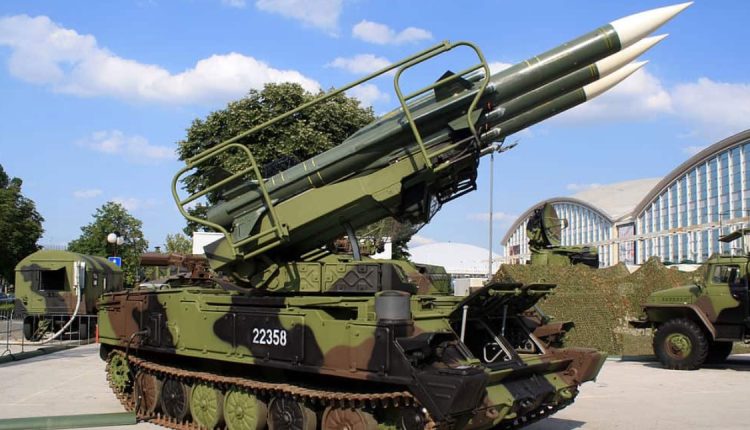
Cuba’s armed forces, estimated at roughly 50,000 active personnel and a much larger reserve, operate largely Soviet-era systems unevenly modernized under decades of sanctions. The island still fields legacy surface-to-air missile systems, including the S-75, S-125, and 2K12 Kub, supplemented by short-range systems and man-portable missiles. These systems would not deny U.S. air supremacy, but they could impose costs in the opening phase, particularly against non-stealth aircraft, drones, and intelligence platforms. Invading Cuba, then, might not be a walk in the park; it could be somewhat costly in terms of equipment and casualties.
U.S. doctrine anticipates those costs and accepts them. The suppression and destruction of enemy air defenses are prioritized precisely because they pose a risk even to the dominant force. In a Cuban scenario, U.S. casualties would likely be limited but politically explosive, given the island’s proximity to Florida and the absence of any direct Cuban threat to U.S. territory or any other legitimate justification. Beyond its initial risks, were the United States to occupy the island, there’s no telling what damage could be inflicted on the occupying forces by a nation that won in Angola and perfected guerrilla warfare.
Cuban military casualties would be far higher, concentrated among air-defense units, internal security forces, and hastily mobilized reservists. But the decisive toll would fall elsewhere. Research on modern air campaigns shows that indirect effects such as hospital shutdowns, shortages of medicine, food distribution failures, accidents caused by power outages, etc., can eclipse direct combat deaths within weeks. Conflicts that degrade electrical grids produce sharp increases in preventable civilian mortality, particularly among the elderly and chronically ill. Cuba’s already strained medical supply chain would make the island especially vulnerable to these cascading effects.
International reaction would not soften the blow. Latin American governments have consistently opposed military intervention in Cuba, and the United Nations General Assembly has condemned U.S. coercive measures against the island year after year by overwhelming margins. An invasion would deepen U.S. isolation in the region and hand rival powers rhetorical and strategic leverage, even absent their direct involvement. But opposing military intervention with empty words is not the same as confronting the world’s biggest bully, and Trump doesn’t think strategically and couldn’t care less what other countries think about him or the United States.
Operationally, all-out war with Cuba would end quickly. Politically and humanly, it would not end at all. The decisive numbers would not appear in after-action briefings, but in hospitals without power, ports without fuel, and neighborhoods whose survival depends on systems modern warfare disrupts. That imbalance between a short campaign and a long reckoning defines what Venezuela prefigures. Whether this can credibly be called the export of democracy is a question the Cuban people could be forced to answer with their last drop of blood.
