
A new Platt Amendment?
This is not the first time Cuba has faced a situation so critical that it seems terminal. We are in a moment darkly similar to that of 1902.
… I am now every day in danger of giving my life for my country, and for my duty—since I understand it and have the resolve to carry it out—to prevent, in time, with Cuba’s independence, the United States from spreading throughout the Antilles and falling, with that added force, upon our lands of America. Everything I have done so far, and will do, is for that purpose. It has had to be done in silence, and as if indirectly, because there are things that, to be achieved, must remain hidden…
José Martí, Letter to Manuel Mercado, Dos Ríos Camp, May 18, 1895
Can one negotiate with a noose around one’s neck? That is the first question we must ask ourselves, for to keep saying that the Cuban State is negotiating with Washington is little short of a euphemism. The Trump administration wants to force the Cuban State into regime change mode, whether through one concession after another, or through an internal coup by elements favorable to U.S. interests, or through a popular rebellion of a conservative, if not counterrevolutionary, nature.
Until something like that happens, imperial arrogance—that psychological derangement that rules the world—offers Cuba only two alternatives: its immediate destruction by military means or its gradual destruction through a total blockade that costs the United States far too little, amid the indolence or open betrayal of practically every State in the world.
But this is not the first time Cuba has faced a situation so critical that it seems terminal. We are in a moment darkly similar to that of 1902, when, in the midst of the first U.S. military occupation, the Cuban political forces of the time were presented with a fatal dilemma: either accept the onerous Platt Amendment to the Constitution[1] of the nascent republic—an amendment that would constitutionally enshrine the United States’ right to intervene in Cuba’s affairs, including by force of arms, whenever its interests were threatened, that is, whenever it deemed it appropriate—or the military occupation would continue; in other words, either a neocolonial republic or a Yankee protectorate.
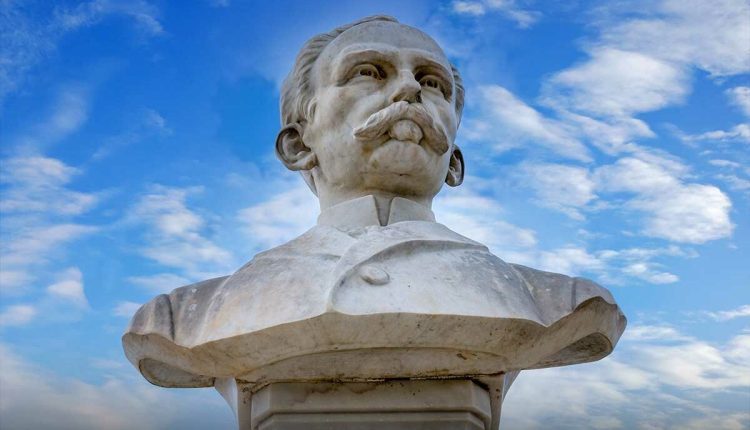
At that time, Cuba was practically as alone as it is today—the rest of Latin America’s former Spanish colonies having long obtained their independence and turned into what José Martí had called “our painful republics of America,” watching from afar Cuba’s lonely and bloody battle, powerless and indifferent. At that time, the living word and guidance of the Revolution’s leader, José Martí, were also missing. Before the last Cuban War of Independence (1895–1898), Martí had foreseen that Cuba’s independence from Spain would also have to be conceived as independence from the United States, as he recorded in an unfinished letter to his Mexican friend Manuel Mercado the day before he fell in battle at Dos Ríos. History did not take long to prove him right.
The 1898 U.S. military intervention in the last Cuban independence war—turned by virtue of U.S. voracious meddling into the fist imperialist war in history— stripped us of our sovereignty in one fell swoop. Cuba was beginning to emerge from the cruelest and deadliest policy of reconcentration devised and implemented by Valeriano Weyler, then the Spanish governor of the island[2]—a chilling prefiguration of Nazism with its concentration camps—which had served William Randolph Hearst to manipulate U.S. public opinion, presenting Cuba as a “weakened nation” in need of the well-intentioned support of the United States.
The U.S. oligarchy, yesterday as today the owner not only of the means of production but also of the public narrative, found it appropriate to disseminate engravings and photographs of Cuban cities, towns, and countryside in a state of complete destitution—images representative of accumulated decay, in which people nevertheless managed to survive. The misery of others continues to arouse imperialism’s morbid fascination.
And yet, there is a crucial difference between then and now: Weyler’s reconcentration morphed into an economic, commercial, and financial blockade lasting nearly 65 years[3], to which, since last January, an energy blockade and the constant threat of invasion have been added. We live under the effects of Yankee totalitarianism, of MAGA neo-fascism. Despite being responsible for this 21st-century version of reconcentration and for the sheer scale at which Cuba suffers it, the United States does not hesitate to present itself as Cuba’s savior, just as it did over a century ago, when its gunboats proclaimed off our coasts the advantages of its racist, barbaric, and corrupt modernity over backward Spain in exchange for our sovereignty.
Now, as then, many believe that an eventual overthrow of the Cuban revolutionary government or its political defeat—the only two options capable of satisfying the Empire—could result in an immediate and short-term improvement in the living conditions of the Cuban people. It would seem that our extreme vulnerability and the isolation to which the world has abandoned us have left us entirely at the mercy of the Empire’s desires, but that does not mean that surrender is the inevitable fate that awaits us.
It is worth recalling what we Cubans stood for more than a century ago: that accepting the Platt Amendment was tantamount to handing over the keys to our home to our powerful neighbor—“the turbulent and brutal North that disdains us,” as José Martí put it—for whom we are second-class citizens, and which already had then, and has today more than ever, sufficient power to subjugate us. The only option with any chance of success that remains available to us is to fight back.
As history has shown, the neocolonial republic ended up imposing and maintaining, through the bleeding of the country, the democracy of foreign masters and their subordinate local representatives. To think that surrender is the only fate in store for us, or even the best path available to us, or the only one that could lead to immediate relief and a gradual improvement in our situation, means submitting to a colonial realism that seems to run rampant across much of the Global South—once known as the “Third World” and as a hotbed of anti-colonialism.
Despite everything, Cuba remains proof that another kind of society is possible, that we need not submit to imperial powers; otherwise, they would not strive so hard to destroy the Cuban Revolution. They want to do this because Cuba, even without being of immediate economic interest to the United States, does have geopolitical, moral, and symbolic value and relevance. Is not the symbolic realm also a fierce battlefield where the new right-wing movements and new forms of fascism seek to project themselves and impose themselves as a full-fledged global neoconservative revolution, while economically they do nothing more than prolong the neoliberal consensus?
It is no coincidence that every realignment of the most reactionary sectors in the United States—from Reagan to Trump, via “W”—recalibrates the most visceral hostility and permanent aggression against Cuba. At the time, Reagan had to deal with the tentative progress that had been made in bilateral relations during the Jimmy Carter administration, much as Trump did immediately during his first term in relation to Obama’s policies.
With one key difference. In the era of Reagan and “W,” there was either the Soviet Union or the Venezuela of the Bolivarian Revolution—and, along with the latter, a wave of progressive governments in the region. Now, however, we are alone. The Cuban government, meanwhile, must govern a country under pressure from all sides, with almost no resources, and under constant threat of a military invasion that could occur at any moment. The island’s population, for its part, is portrayed in the mainstream media—as the rest of us too often imagine it in similar terms in spite of ourselves—as a passive, suffering entity, ravaged by countless hardships; mere victims without agency or judgment, who are either opposed to the government or are making fools of themselves: one or the other.
And yet, the people of Cuba are far from fitting that simplistic image, which is at once paternalistic and condescending, denigrating, and racist. That is why I prefer to think of real, flesh-and-blood Cubans, with a voice and a vote, among whom I was born, raised, have suffered, and continue to live. For example, my grandparents, who have experienced firsthand the entire revolutionary process, and who still carry the memory of their own Mambí grandparents from the War of ’95 and that of their parents who suffered under the corrupt, U.S.-submissive, and tyrannical government of Gerardo Machado (1925–1923). My grandparents, who often recall the Revolution as a barrage of vicissitudes, but whom I have never heard make either any implausible apology of the Cuban revolutionary process or a baseless counterrevolutionary critique of it.
My grandparents, with hardly any of the resources they need, alone—to the extent that one can be alone in a country as intensely sociable as Cuba—weakened by so many years of deprivation and sacrifice, could be something of a metaphor for my native country. No one knows how, but they get up day after day to carry out “all the tasks”—as they say, in the old language of the Revolution—of daily survival. The line to buy bread or other scarce foods at prohibitive prices, the rearranging of laundry and cooking schedules based on when water and electricity will be available, if they’re lucky enough for both water and electricity to be aviulable at the same hours. None of that overwhelms or demoralizes them, though it takes a toll on them and robs them of a vital energy, a toll they prefer to keep to themselves.
Those same grandparents who, despite everything, never fail to send a message of support or express concern for their grandson—me, in this case—who is far away (for the moment) and alone, even if it is that other kind of loneliness, due to distance, not absence. Perhaps that is why—because they know how to understand the pain of others—my grandparents always say that they are “fine” or simply that they are “alive,” as if those ritualistic, bare words could calm the one—me, in this case— who asks them every day amidst a sense of anguish and helplessness. And yet, after fulfilling “all the tasks” of daily household life and survival, they find or make the time to support their sister, who has a son with Down syndrome and has been battling cancer herself for a year, and now sees her surgery delayed—precisely at the most critical moment in the progression of her illness—due to the total blockade by the United States.
That solidarity with others at the expense of one’s own very relative and precarious well-being, that capacity to face the most basic daily challenges with fortitude, that willingness to put on a brave face in the face of ever mounting difficulties, or to say that “today they let us off the hook and there was no blackout, so we’re fine”—all of that is the real and living embodiment of the history of the struggles of the Cuban people and their Revolution.
The Yankees want not only to destroy the Revolution and overthrow the current government of Cuba—and, with it, the State born of the Revolution—all in that order—but they also want to snatch away what our grandparents represent and stand for, all that culture in which the richness, complexity, and fortitude of the Cuban process are embodied. They want to cut us off from the living memory of our venerable elders, those who once built socialism, even without fully knowing how they were doing it and without asking themselves too many questions in the process.
That is why no negotiation or concession will ever be enough to satisfy the Empire’s rapacious and vulgar ambitions, for what it seeks to snatch from Cuba is precisely what most—and today one might say what only—still distinguishes Cuba in this corrupt and corrupted world, the only thing left to us Cubans amid poverty and aggression, which is the best we have built through daily effort and sacrifice for now two whole centuries of epic struggle, and the only thing that, ultimately, still sustains our hope: the sacred dignity of Cuba.
Translator’s notes
[1] Through the Platt Amendment (1901) to the Cuban Constitution, the United States set seven conditions for the withdrawal of its troops from the Island after the Spanish-American War, de facto transforming Cuba into an American protectorate, where the U.S. could intervene at will to protect American interests, and securing land for naval bases such as Guantanamo Bay.
[2] Governor-General of Cuba (1896–1897), Valeriano Weyler is infamous for the brutality with which he attempted to suppress Cuba’s rebellion against Spain through a policy of mass internment, called “reconcentration,” which is estimated to have killed between 170,000 and 400,000 Cubans, significantly influencing U.S. interest in declaring war on Spain.
[3] On September 4, 1961, the U.S. Congress passed the Foreign Assistance Act, prohibiting aid to Cuba and authorizing President Kennedy to impose a complete trade embargo against Cuba.
** “La nueva Enmienda Platt o la lucha por la dignidad,” by Leyner Javier Ortiz Betancourt, appeared on La Tizza on 19 March 2026. Provided is an English translation of an expanded and revised version of the original Spanish text published in Communis.
