
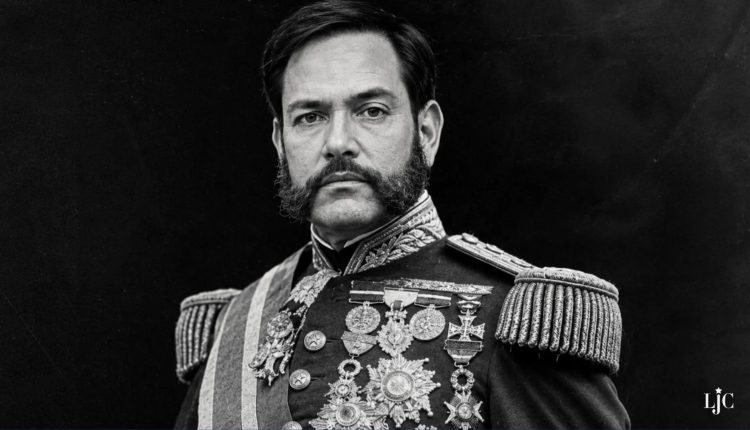
Rubio’s Reconcentration
The strategy aims to create a humanitarian crisis—shortages, hunger, no fuel, and the inability to sustain daily life -- echoing the logic of collective punishment once seen in General Weyler's reconcentration policy.
The strategy aims to create a humanitarian crisis—shortages, hunger, no fuel, and the inability to sustain daily life. This approach is used to promote regime change in Cuba, echoing the logic of collective punishment once seen in General Weyler’s reconcentration policy. Stung by criticism from his supporters for the lack of action despite many promises, Marco Rubio has made headlines again with a new document claiming that Cuba is the capital of 21st-century communism, whose revolution was aimed against the United States and Western civilization.
Cuba: The Capital of 21st Century Communism, in its one hundred pages, argues—among other claims that seem to have come from an unstable mind—that Cuban influence extends from the Black Panthers and the Weather Underground to Antifa, labor unions, universities, anti-ICE organizations, and anti-racist movements, and that it was even behind the protests following the killing of George Floyd.
This report by the State Department functions as an official endorsement of a series of political actions designed to justify a possible military intervention in Cuba, which has been repeatedly leaked to U.S. media outlets. It is therefore a key part of the growing consent framework built since January 3 through references to Cuba in Donald Trump’s responses to reporters, statements by Rubio, and comments from anonymous sources.
Regarding these attempts to justify attacking the country by depicting it as a threat to U.S. national security despite its “material weakness”—as Cuba: The Capital… claims—there is little left to use as a pretext now that almost every action by the global left, considered malicious or terrorist, is being blamed on Cuba.
Since the beginning of the year, Marco Rubio’s policy has been to follow the final push strategy: one more sanction, a bit more suffering, a little more time without fuel. Just as most Cubans have endured a policy that asks everyone to make sacrifices, what reason is there to believe that a military intervention would be any different?
Authoritarianism in Cuba won’t be dismantled by a U.S. government that is becoming more authoritarian itself. Democracy won’t arrive through an administration that is eroding its own democratic institutions. And the freedoms lacking in Cuba won’t be delivered by those who seek to strip women of the right to vote, try to criminalize any viewpoint different from their own, and imprison migrants without due process.
Furthermore, no one can realistically hope for prosperity through oil blockades, “humanitarian” bombs, or increasing poverty in a country already brought to a halt. Neither democracy nor freedom can come from a people worn out and stripped of the resources needed to survive. It is clear that the Cuban government is responsible for its own poor internal management. However, criticizing or opposing that government does not mean supporting policies that aim to cause a humanitarian crisis in Cuba—an apparent goal of Rubio’s Reconcentration.
