
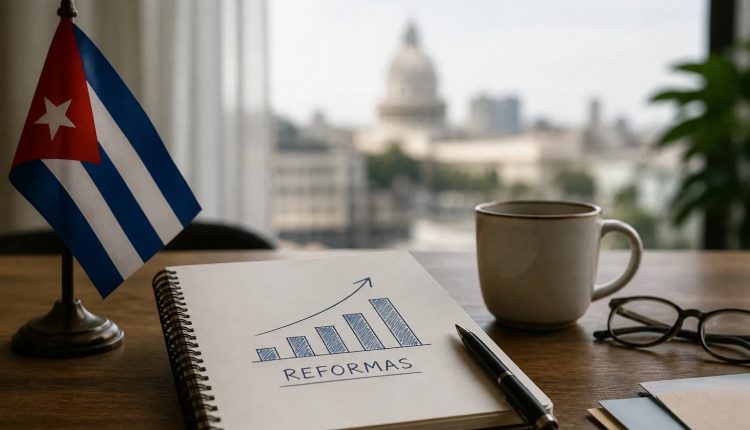
The new structure of ministries and economic reform in Cuba
Reforming state enterprises should be a key part of the overall restructuring of the economy. This involves more decentralization and better-regulated markets, not less.
Viewed broadly and within the context of the current state of the Cuban economy, the decision to restructure and resize the country’s ministerial apparatus clearly responds to a necessity. However, as we have emphasized many times, it should be part of a comprehensive and deep reform of the economic system. Therefore, it is worth analyzing it more closely, even as an initial reflection.
Several of these ministries already had many unfilled positions, as numerous officials have left due to salary issues, personal difficulties, transportation problems, and other reasons. On the other hand, with the reduction in the number of ministries, the corresponding ministers will be appointed in accordance with the country’s cadre policy.
Some announced mergers seem questionable, such as combining construction with industry (which involves many diverse industries that have little to do with construction, a highly complex activity with its own dynamics), merging environment with habitat and housing, and separating environment from science—which is now connected to higher education—when that relationship previously yielded notable results, and so on.
At the same time, the Ministry of Domestic Trade vanishes, even though it performs an important and complex role, especially during periods of strong supply tensions; it is unclear who will take on that responsibility. Additionally, alongside the Ministry of Communications, a Ministry of Information and Social Communication emerges, although its specific functions are not yet fully clear, even if assumptions can be made.
In general terms, one could argue that better solutions might have been possible, although we still do not have all the criteria that were taken into account in each of these decisions.
Another point is that the newly formed Ministry of Economy and Finance—a merger we find quite logical—still uses “planning” as a broad term. I mention this because, although strategic development planning is a vital principle for a country like Cuba, it should not be equated with maintaining a bureaucratic planning system that has become a barrier to the new economic dynamics needed.
If one examines the section defining what a ministry is, it seems they may continue overseeing enterprises, especially with the creation of the new National Institute of State Business Assets (INEES), a kind of “super ministry” that could be intended—though we do not yet know—to increase centralization and cross-cutting controls.
As we have argued in other writings, we believe that reforming state enterprises should be a key part of the overall restructuring of the economy, not to make them less public, but to eliminate inefficiency. This involves more decentralization and better-regulated markets, not less.
This important new institutional structure, the INEES, exists in both China and Vietnam. There, it is focused on specific, well-defined business conglomerates that are crucial to the state’s economy and development, though only to a certain extent. Here, it appears to refer to the entire system of state enterprises. Its functions are supposed to be outlined in the enterprise law, but since this law has not yet been approved, its roles remain unclear. However, based on circulating drafts, some assumptions can be made.
One issue that has not been established—and which we consider fundamental—is that most positions in the ministries should be open to competitive selection to ensure officials with the highest qualifications, capabilities, and commitment to perform those roles.
The main concern is that it might just be another bureaucratic tweak rather than real institutional reform that addresses the big, widespread changes the economic system needs. Time is running out.
