

Cuba: Stagflation unleashed?
For the first time this year, the cumulative increase in consumer prices in Cuba (7.18%) surpasses the increase during the same period in 2025 (6.56%). Coupled with the collapse in GDP, this suggests uncontrollable stagflation.
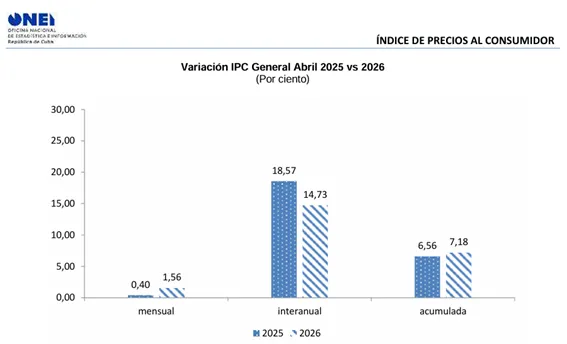 A potential decrease in GDP of at least 15% in 2026 would be accompanied by a sharp rise in prices, which could weaken the economy, harm social welfare, and impede economic policy.
If anything is clear at the start of May 2026, it is the complete irrelevance of the widely-publicized “Government’s 2026 Economic and Social Program.” It could be discarded without any real impact.
The situation could be worse because any analysis of inflation in Cuba must start with the questionable reliability of its official measurement. Many economists believe that official statistics underestimate inflation.
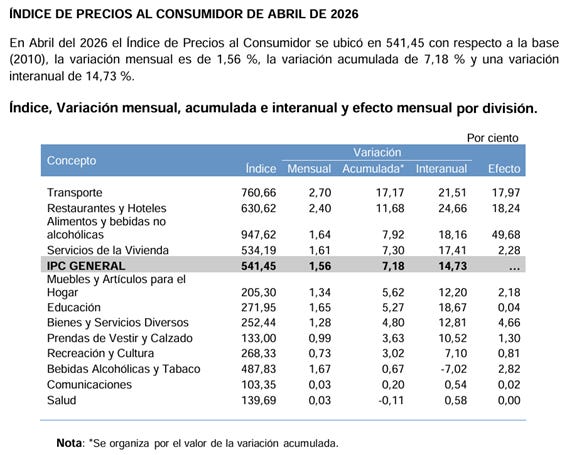 The short-term collapse is caused by geopolitical factors and results from the tightening of U.S. sanctions, which worsen the flaws of a dysfunctional economic system in Cuba.
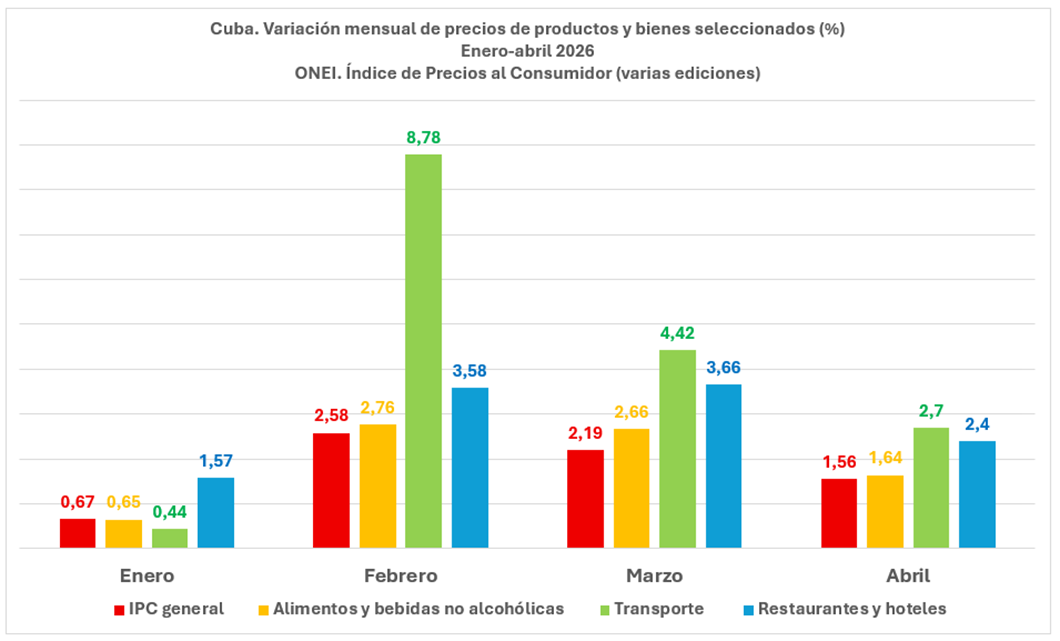
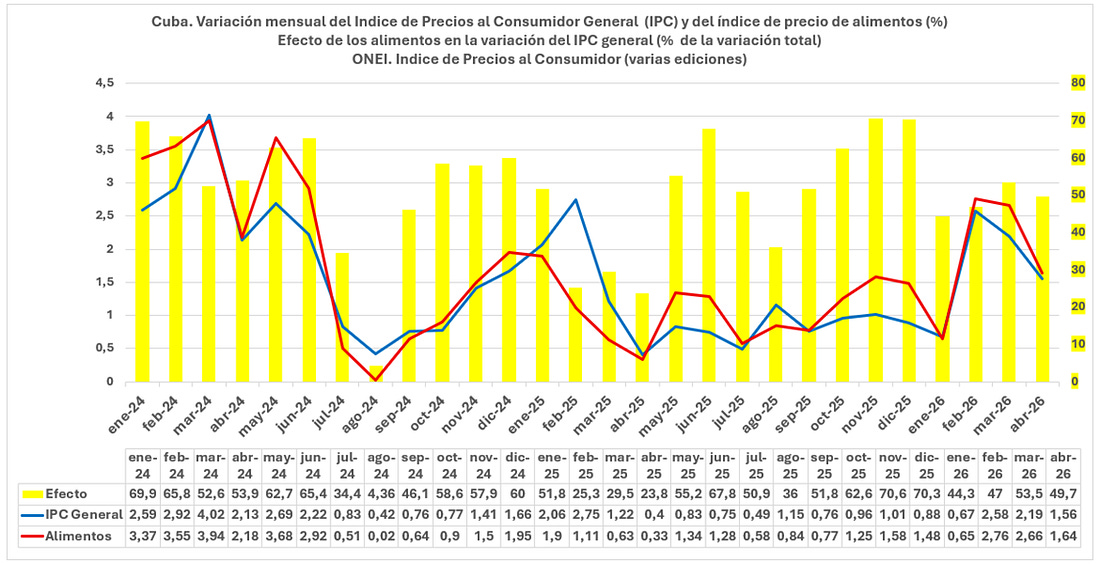
In April, Cuba’s official consumer price index showed a slowdown compared to February and March, although the April increase was greater than the rise in 10 of the 12 months of 2025.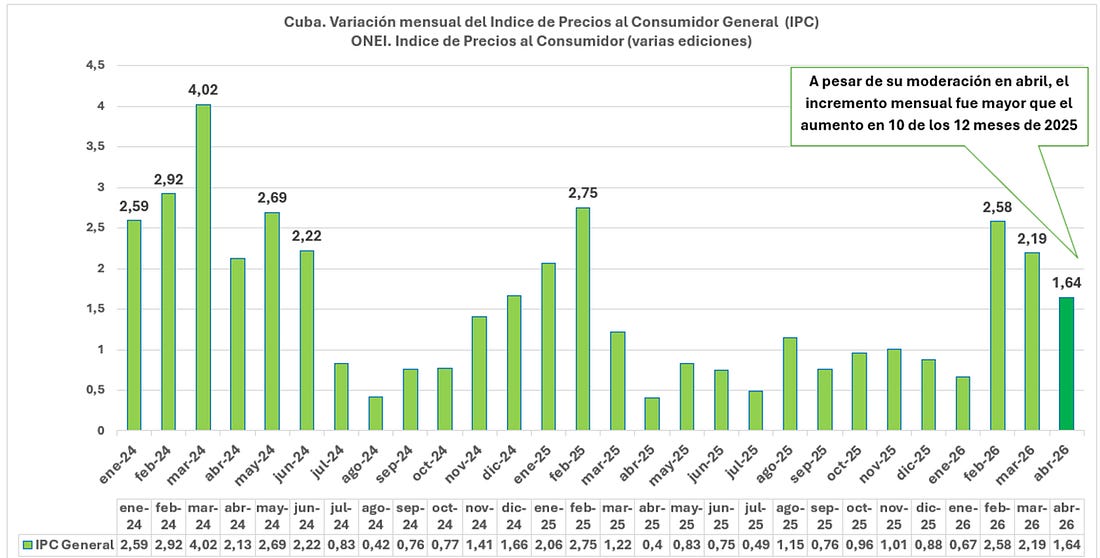 Typically, “food and non-alcoholic beverages” has been the category with the largest monthly effect on prices, while transportation has had a smaller influence. In February 2026, transportation had a very high impact, reflecting the effect of the “oil blockade” imposed by the United States on Cuba.
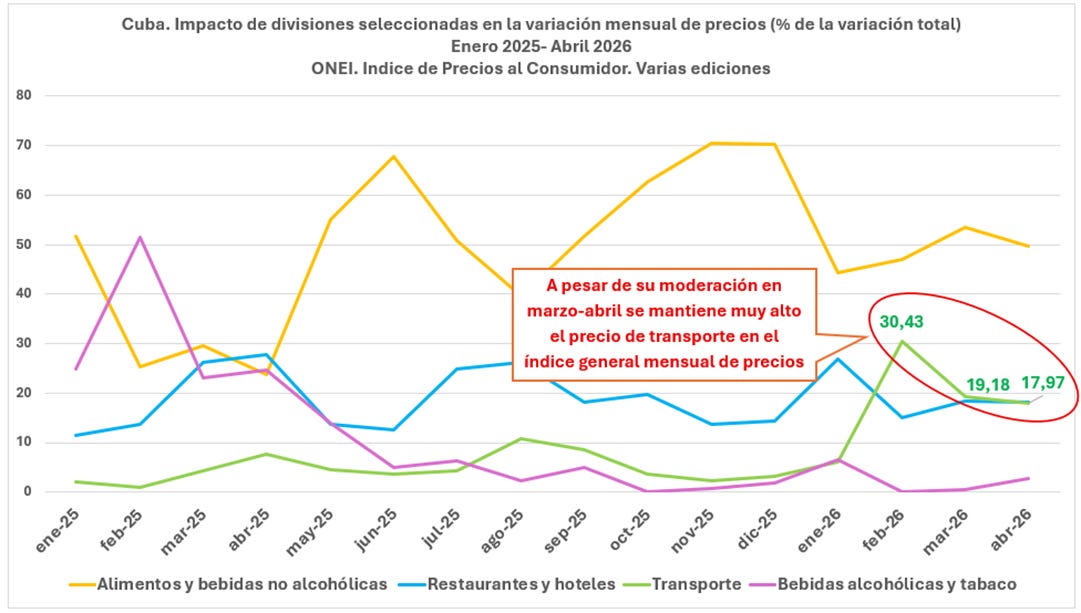 The impact of rising transportation prices on the overall price index declined in March and April compared to its extraordinary level in February, but stayed relatively high, as it has been the category with the largest monthly price increases.
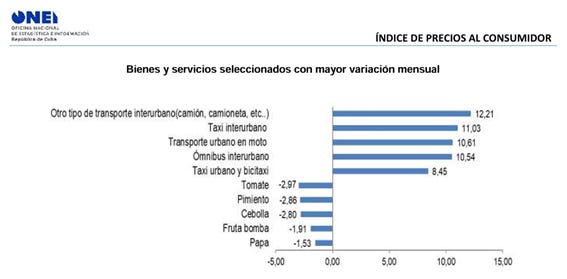
 Five modes of transportation drove the price increases in April.
 The “food and alcoholic beverages” category decreased its relative weight in driving overall price increases starting in February 2026, but has remained the most influential, accounting for more than 47%.
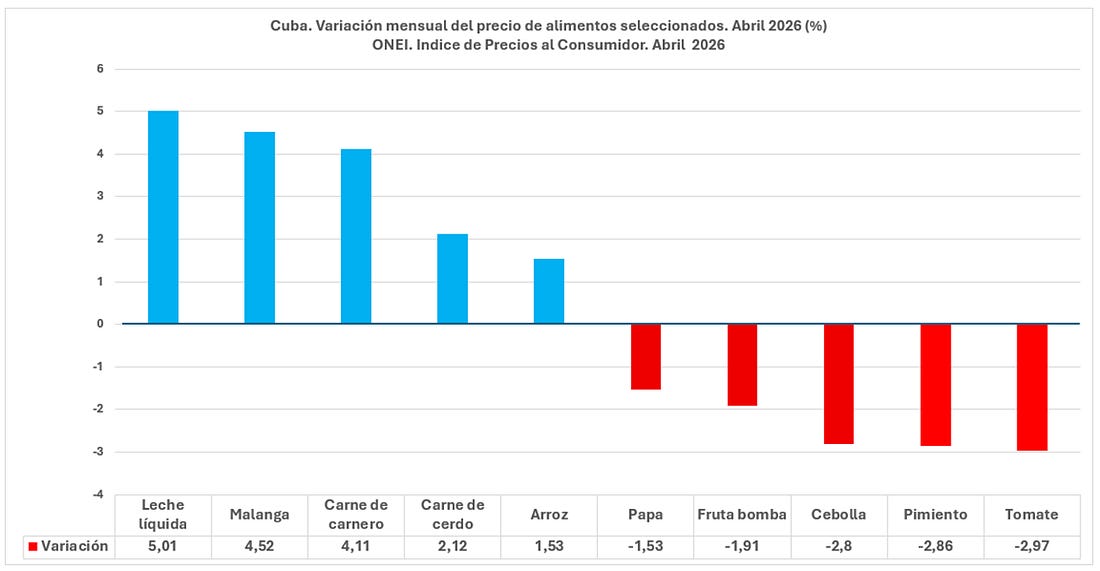
 The price variations in food products shown in the report indicate that in April 2026, there were significant monthly price increases for domestically produced food.
 The “lag” of wages and pensions behind inflation serves as an anti-inflation tool for the government, but it inevitably has a recessionary impact on the economy, worsening the crisis and showing the failure of current economic policies.
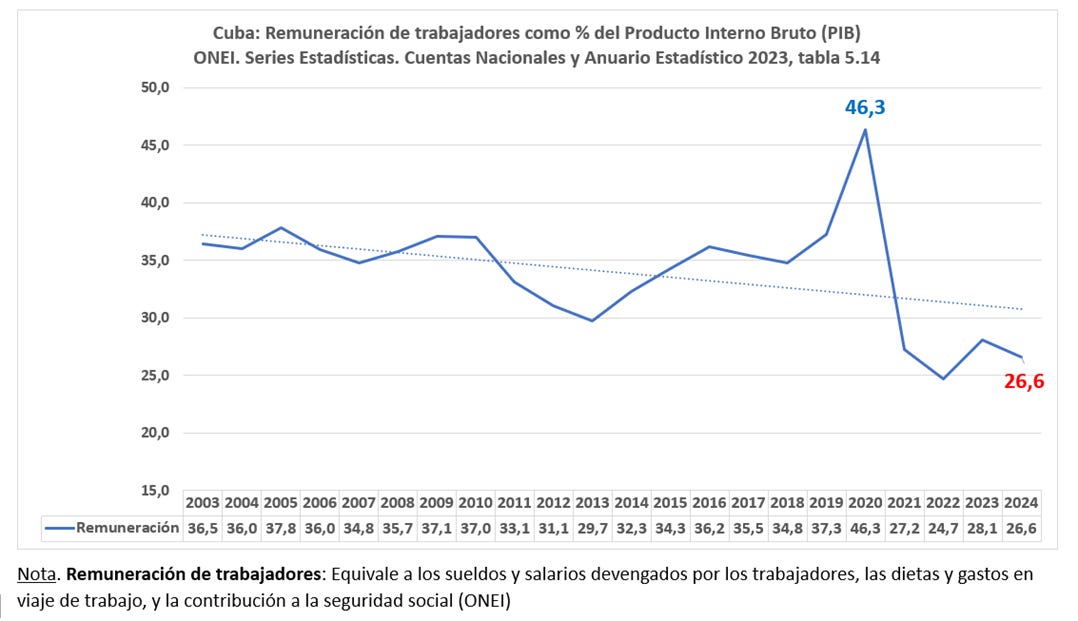 At this point, widespread impoverishment and the reduction of real budget spending (as a percentage of GDP) are not sufficient as anti-inflation tools. Additionally, the current official program is not viable given the severe energy and foreign currency shortages.
A potential short-term macroeconomic stabilization in Cuba—where reducing inflation is a key indicator—is not achievable without redesigning the country’s model of international integration, which would require negotiations with the United States.
The geopolitical conditions in which an exhausted economic model is forced to operate amid a prolonged structural crisis shift the possibility of a short-term macroeconomic fix from economic policy to political negotiation.
