
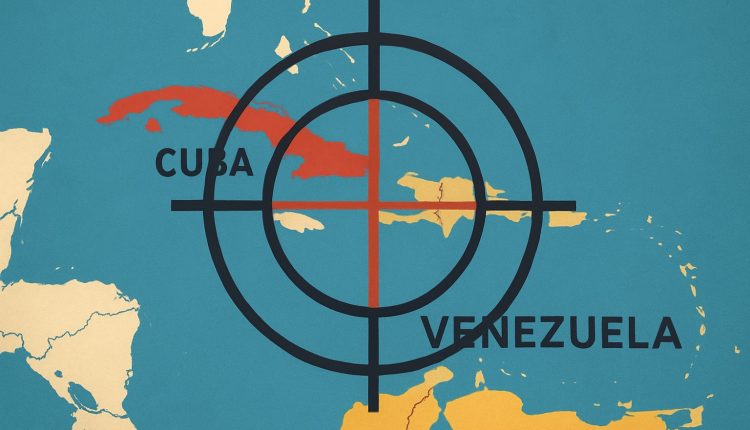
Military action against Cuba seems imminent
There are signs of a shift in the Trump Administration’s approach to Cuba—from a strategy focused on “maximum pressure” to one that might include military options.
There are signs of a shift in the Trump Administration’s approach to Cuba—from a strategy focused on “maximum pressure” to one that might include military options. In April 2026, the U.S. Navy deployed an MQ-4C Triton drone for a 12-hour reconnaissance mission around Cuban airspace, including near Havana and Guantánamo Bay, where the U.S. naval base is located. Such extended, high-altitude intelligence, surveillance, and reconnaissance (ISR) flights are usually used to map terrain, track infrastructure and military assets, monitor communications, and identify potential strategic targets, rather than for routine patrols.
Analysts note that these capabilities are often used in the early stages of war planning. This development increases the U.S. naval presence in the Caribbean and follows reports of President Trump threatening to send a U.S. aircraft carrier near Cuban waters. Historically, U.S. military actions have often been preceded by naval and surveillance buildups, which are used both to guide and prepare for possible intervention.
At the same time, the policy of maximum pressure has continued to escalate, both economically and politically. By the end of April 2026, new sanctions were enacted to discourage the remaining international actors from doing business with Cuba, including those involved in energy, mining, finance, technology, defense, and security, with even consequences for humanitarian aid. The Executive Order titled “Imposing Sanctions on those Responsible for Repression in Cuba and for Threats to United States National Security and Foreign Policy” warns of secondary sanctions such as fines and property seizures for any individual or entity that directly or indirectly trades with Cuba, meaning even third-party suppliers could be impacted.
These measures build on a trade embargo that has been in place for more than six decades and a three-month oil blockade, neither of which has achieved the stated goal of regime collapse. Secretary of State Marco Rubio has increasingly blamed Cuba’s economic crisis on its government and has stressed that regime change is essential for economic recovery.
The broader geopolitical context emphasizes these concerns. The Caribbean remains strategically important for U.S. energy security and regional influence within the “Donroe Doctrine,” and Cuba’s geographic location makes it a key player in great-power competition in the Western Hemisphere. Secretary Rubio has renewed allegations of Russian and Chinese intelligence bases in Cuba, framing them as reasons for a stronger U.S. response. China and Russia have denied these claims and continue to support Cuba—especially in solar energy projects and oil shipments—helping it offset the impacts of U.S. sanctions and the oil blockade. Overall, these dynamics reflect a dual approach of applying pressure and building readiness, a pattern that has historically led to more direct intervention.[4]
These developments suggest that the escalation of economic and political pressure may not be solely aimed at forcing negotiations on terms set by the Trump Administration. Instead, it could also be used to justify potential military action by worsening the humanitarian crisis and reinforcing narratives of state failure and alignment with U.S. adversaries. Although there are signs of diplomatic engagement, it appears limited to early-stage exchanges and public signals. Meanwhile, U.S. leadership continues to call for fundamental political change in Cuba, while Cuban officials emphasize unity and a willingness to resist even a military invasion. This indicates a possible deadlock in diplomatic efforts.
Domestic political dynamics in the United States further highlight the sense of escalation. Congressional Democrats have called on the State Department for answers after members of a House delegation were denied the chance to meet with Chargé d’Affaires Mike Hammer at the U.S. Embassy in Havana during an April visit. They contended that limiting access during a time of reported negotiations and increased tensions weakens congressional oversight. Simultaneously, President Trump has reached out to conservative Cuban American communities, including by suggesting that exiles might be able to regain property lost after the Cuban Revolution, reassuring them that “Cuba is next” after Iran.
A recent poll commissioned by the Miami Herald found that most respondents in four South Florida counties support military intervention; however, questions remain about the poll’s methodology and whether it accurately represents the population, since the full questionnaire and detailed data have not been publicly released. Social media commentary has also drawn parallels between current events and pre-conflict conditions in other regions.
While none of these factors alone serve as conclusive proof of imminent military action, their convergence is noteworthy. Increased military surveillance and presence, intensified economic pressure, heightened rhetoric, and strategic geopolitical framing together indicate that the risk of military escalation is rising. At the same time, structural realities—such as the limited presence of organized domestic opposition within Cuba—suggest that any effort at regime change would likely require direct external intervention. Such a scenario involves significant risks, including the potential for broader international conflict, especially given Russia’s expressed willingness to support the Cuban government.
