
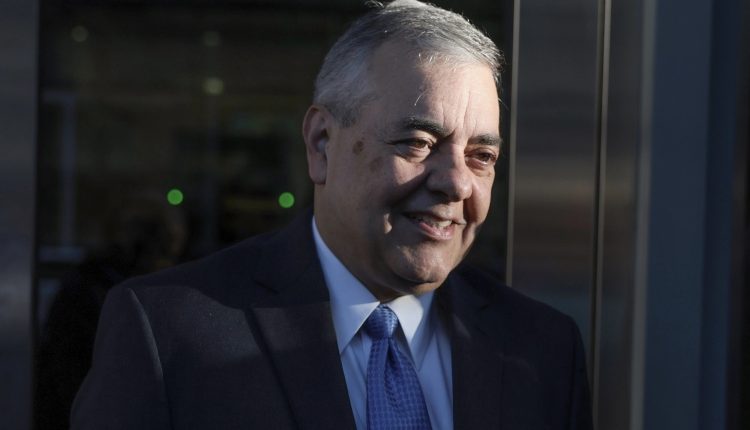
David Rivera: Guilty, finally
Rivera’s career raises uncomfortable questions about how long such behavior can persist before consequences finally catch up.
The story of David Rivera is not just about one man’s fall—it’s about how privilege, access, and political power can be leveraged for personal gain with remarkable persistence. For years, Rivera cultivated the image of a hardline public servant, particularly on issues like Cuba and Venezuela, aligning himself with anti-authoritarian rhetoric. Yet his recent conviction for secretly lobbying on behalf of interests tied to the Venezuelan government—without registering under U.S. law—exposes a stark contradiction between public posture and private conduct.
What makes Rivera’s case especially troubling is not simply the illegality of his actions, but the pattern. This is not a one-off lapse in judgment; it’s the culmination of a long trajectory marked by ethical breaches and legal scrutiny. From campaign finance schemes during his time in elected office—where he covertly funded a sham candidate—to later entanglements involving multimillion-dollar contracts, offshore dealings, and alleged tax violations, Rivera repeatedly operated at the edge—or beyond—the bounds of the law. The throughline is clear: a willingness to exploit insider knowledge and political connections while evading transparency.
There is also a deeper institutional failure embedded in this saga. Rivera’s career raises uncomfortable questions about how long such behavior can persist before consequences finally catch up. He moved through state and federal office, navigated investigations, and continued to secure lucrative opportunities tied directly to his political experience. That trajectory reflects a system in which accountability is often delayed, fragmented, or insufficient—especially for those who understand how to manipulate it.
His conviction, tied to dealings involving figures connected to Nicolás Maduro, underscores the geopolitical irony. Rivera built political capital in South Florida by opposing regimes like Maduro’s, only to later engage in undisclosed work that, according to a jury, benefited those same interests. That contradiction is more than hypocrisy—it erodes public trust in the sincerity of political advocacy and raises doubts about how often such duplicity goes undetected.
Ultimately, Rivera’s downfall is not just a personal reckoning; it’s a cautionary tale. Public office confers privilege—access to power, networks, and influence—but it also demands a higher standard of conduct. When that standard is repeatedly violated without immediate consequence, the damage extends beyond one individual. It corrodes confidence in democratic institutions and reinforces a cynical belief that rules are different for those who know how to game the system. Rivera’s career stands as a stark example of what happens when accountability arrives late—and why it needs to come sooner.
