
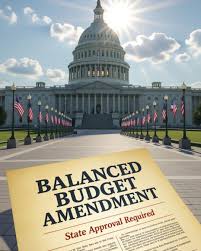
Balancing the budget on the backs of the most vulnerable South Floridians
The largest parts of federal spending are Social Security, Medicare, Medicaid, and defense. And Washington has shown much less hesitation to spend on military priorities.
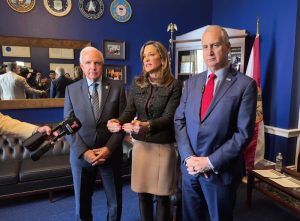
When South Florida members of Congress Mario Díaz-Balart, Carlos Giménez, and María Elvira Salazar voted for a balanced-budget constitutional amendment, they aligned with a familiar Washington talking point: fiscal responsibility.
But here in South Florida, that vote means very different things. Because in Miami-Dade and nearby areas, the federal budget isn’t just an idea; it’s about survival.
This area has one of the oldest populations in the United States. Hundreds of thousands of residents rely on Social Security not as a supplement but as their primary income. Medicare is not optional—it is the difference between receiving care and going without it. Medicaid covers the gaps for the most vulnerable. And the Affordable Care Act—“Obamacare”—has one of its highest enrollment rates in the nation right here in South Florida.
These are not just line items; they are lifelines. So, what does a balanced budget amendment really mean in this context?
The federal government currently runs deficits of $1–2 trillion each year. A constitutional requirement to eliminate that deficit would force Congress to make immediate and drastic choices: raise taxes significantly, cut spending, or both.
And this is where the political rhetoric collides with mathematical reality.
The largest parts of federal spending are Social Security, Medicare, Medicaid, and defense. There is no realistic way to achieve a balanced budget—at least not within the timeframe such an amendment would require—without putting immense pressure on these programs.
Supporters claim the amendment doesn’t require cuts. That is technically accurate. But it sidesteps the real question: what, specifically, would be cut instead?
While calls for austerity grow louder when discussing domestic programs, Washington has shown much less hesitation to spend on military priorities. The United States continues to allocate large amounts to defense, prepare for potential conflicts—including with Iran—and send billions in aid abroad, including to Israel during a devastating and widely condemned campaign in Gaza.
It appears that deficits are acceptable—depending on what they are funding.
That contradiction is important, especially in South Florida.
This is a region where many retirees live on fixed incomes that do not go far enough in today’s economy. It is a place where working families rely on Affordable Care Act subsidies to afford health insurance. Here, healthcare costs, housing costs, and food prices continue to rise faster than wages or benefits.
Talking about balancing the budget without specifying what will be cut isn’t fiscal responsibility; it’s political evasion. And casting that vote while representing one of the most federally dependent constituencies in the country is even more than that — it’s a gamble.
- A gamble that the cuts will be made elsewhere.
- A gamble that political backlash can be controlled.
- A gamble that the programs supporting this community will somehow be spared.
But if the math tells us anything, it’s that such assumptions probably won’t hold.
A constitutional amendment isn’t just a messaging bill; it’s a binding constraint. Once enacted, it doesn’t bow to political convenience or campaign promises. It mandates tough, immediate choices.
And those choices will not be made in the abstract. They will be felt here: in Miami’s retirement communities, in working-class neighborhoods, and in households where a Social Security check or a subsidized health plan makes the difference between stability and crisis.
Díaz-Balart, Giménez, and Salazar may describe their votes as support for fiscal discipline. But in South Florida, discipline enforced without clarity is nearly the same as risk.
The real question isn’t about balancing the budget, but about who bears the cost. And in this community, the answer may already be written.
