
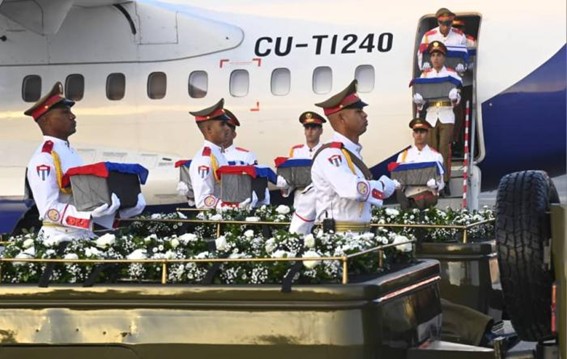
Thirty-two reasons not to kneel
They are home, the mortal remains of those men who did not hesitate to risk their lives for principles and so many reasons. Beyond what military specialists and the ever-present armchair strategists may conclude, the regrettable event that occurred on January 3rd has elicited a response in Cuba that the aggressor should consider and never underestimate.
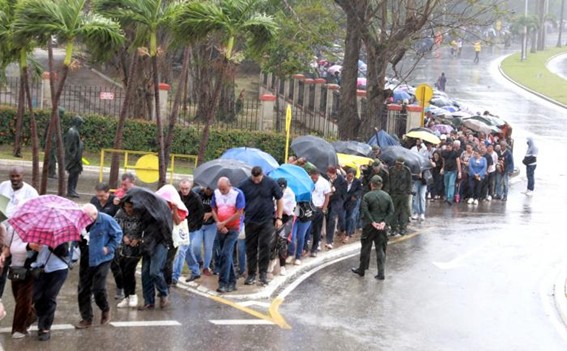
Our dead arrived under that rain, a prelude to the winter “north winds,” as if our sky were shedding tears for them, and after being received by the highest authorities of the country, it was the people along the entire length of Rancho Boyeros Avenue who bowed their heads as they passed by.
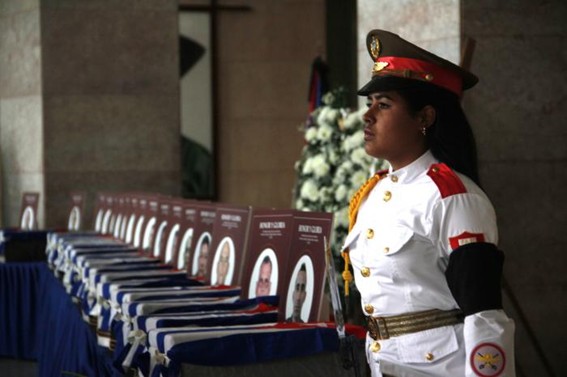
There they were, on display in the main hall of the Ministry of the Revolutionary Armed Forces, all promoted to the highest military rank to receive their well-deserved tribute.
No one shouted or even applauded with emotion, as often happens in Europe. Silence was the response because every Cuban, a defender of their sovereignty, has demonstrated that a U.S. adventure, as the one attempted in Venezuela, will be met with a different response on the island.
Yesterday, the wounded also arrived, those who were more fortunate in the face of an enemy superior in numbers and firepower.
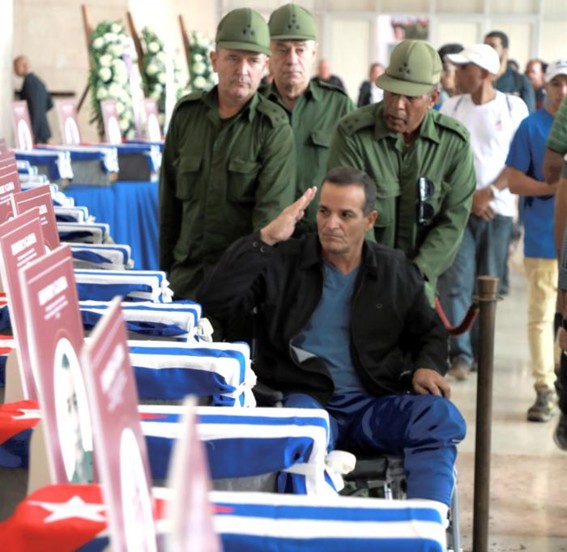
This is who we are and who we will continue to be, and I include those whom Fidel Castro, at the time, distinguished between those who were “against the Revolution and those who were dissatisfied with it.”
And there are those who are dissatisfied, but not traitors. They are the ones who believe, with ample reason, that the nation must change without jeopardizing its independence or admitting the slightest sign of foreign interference, no matter where it comes from.
As the familiar saying goes, we wash our dirty laundry at home.
On Friday, many demonstrated in the José Martí Anti-Imperialist Plaza, just a few meters from the U.S. embassy, in the face of an enemy that is euphoric yet visually impaired when it looks toward the island.
What has happened in these bitter moments reminds me of a phrase, now forgotten and out of use, from the early days of the Revolution. It was very significant for evaluating and defining a person: “That person is for our Motherland or Death.” Not as a slogan, but as a conviction.
Thousands of “Motherland or Death” supporters have reappeared to mourn their dead and reaffirm their commitment.
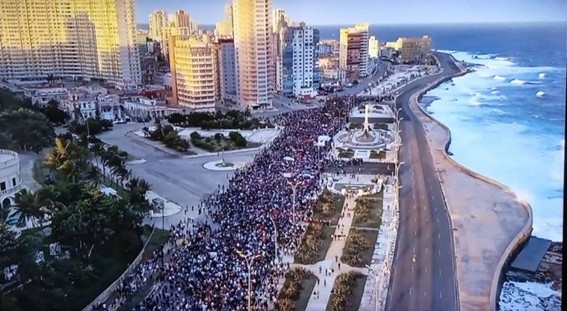
More than half a million Havana residents participated in the March of the Fighting People.
