
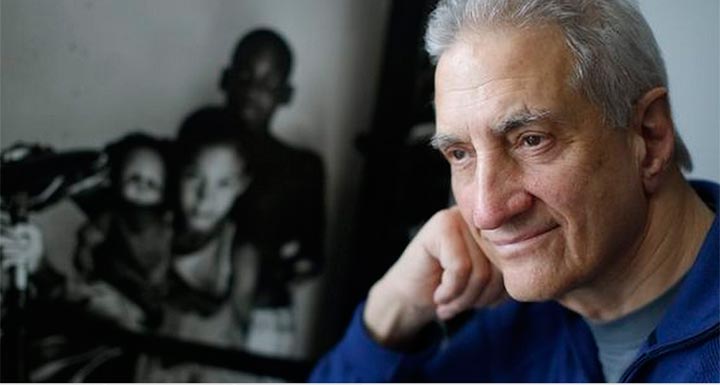
Amherst photographer is hopeful, fearful for changes coming to Cuba
Errol Daniels has plenty of observations – and one strong warning – about life in Cuba today, as the world prepares for major changes in Cuban-American relations.
Daniels ought to know. A documentary photographer, he has just returned from his 16th visit to the island nation in the last 15 years.
Almost 12 years ago, for one of the two photography books he has published on Cuba, Daniels wrote, “The airport is modern, but step outside and it’s 1959.”
“I still feel that way,” Daniels said, after returning from a weeklong visit to Cuba in late January.
Yet he has a passion for Cuba.
“I love the country,” the East Amherst resident said. “I love the people of Cuba. They are warm, welcoming and unspoiled. It’s the only place in the world that I know of where I can go into a neighborhood, look in a window and be invited in for coffee.”
That intangible is exactly what Daniels is afraid of losing with the coming changes.
In December, President Obama announced that the United States would attempt to re-establish diplomatic relations with Cuba, opening up the island to an increased flow of travel, information and commerce between the two nations.
Daniels, though, raised a “Stop” sign to Americans who think they can sneak into Cuba now without consequences.
For years, some Americans have skirted the travel ban on visiting Cuba, often by flying there through Toronto or Cancun. Since Cuban authorities routinely didn’t stamp Americans’ passports, returning tourists could get away with saying they came from Canada or Mexico.
Not anymore.
“Anyone who travels to Cuba now illegally is very foolish, because they stamp their passports, going in and out of Cuba,” he warned.
“Don’t do it. Wait.”
Daniels believes most Cubans welcome the coming changes, though some remain skeptical.
“I probably talked to 50 people the week I was there,” he said. “Some people doubt it’s really going to happen. But the consensus is that the Cubans will be better off economically.”
That includes access to the Internet and citrus products they don’t have now, more food variety, better jobs and the ability to make more money and have a better life.
“They’re OK with the Cuban economy being based largely on tourism, because it will bring more and better jobs, more reasons for people to stay,” he added.
But many young Cubans are concerned about losing some of their greatest assets, particularly free education and free health care, he said.
Daniels has concerns about the opening up of Cuba to Americans, about the new tourists being pushy and demanding, taking advantage of the Cuban people.
“The Cuban people love Americans,” he said. “They think we are great. They think our country is great. I hope tourism does not spoil Cubans’ view of Americans.”
Unlike someone who has made annual trips, Daniels visited 15 times between March 2000 and December 2004, under the auspices of the B’nai B’rith Cuban Jewish Relief Project. But during President George W. Bush’s second term, Daniels lost his ability to go there. After Obama loosened those travel restrictions in 2011, the retired optometrist returned in January, as a professional photographer doing research on Cuban Jews.
After being gone from Cuba for a full decade, Daniels has a sharp eye for what has changed, and he believes living conditions have improved for the Cuban people in that decade.
Public transportation, in a country where few people own cars, is more efficient. People are free to move from one neighborhood to another without government permission. Pharmacy shelves are stocked with more medicine. “Dollar” stores have more goods for sale. There are more private restaurants in people’s homes, known as “paladars.”
He’s also has noticed – and photographed – building restorations. Anyone spending any time in Havana has been struck by the crumbling condition of otherwise stately mansions.
Most of those positive changes have come in the last three or four years, he’s been told, leading to the recent thaw in Cuban-American relations.
“I believe, and my sources tell me, that it’s because Raul Castro believes these changes are necessary,” he said of the current Cuban president. “From what I’m told by Cubans, this last agreement with Obama happened because young people are fleeing Cuba in droves. The government understands that it needs young people to advance, to make it a more desirable place to live.”
Daniels has mixed views about those changes.
“I have a fear that the Cubans will lose their love of us,” he said. “I want us to behave, to be kind to the Cuban people who have suffered for 50 years, partly because of the policies of our government.”
(From: The Buffalo News)
